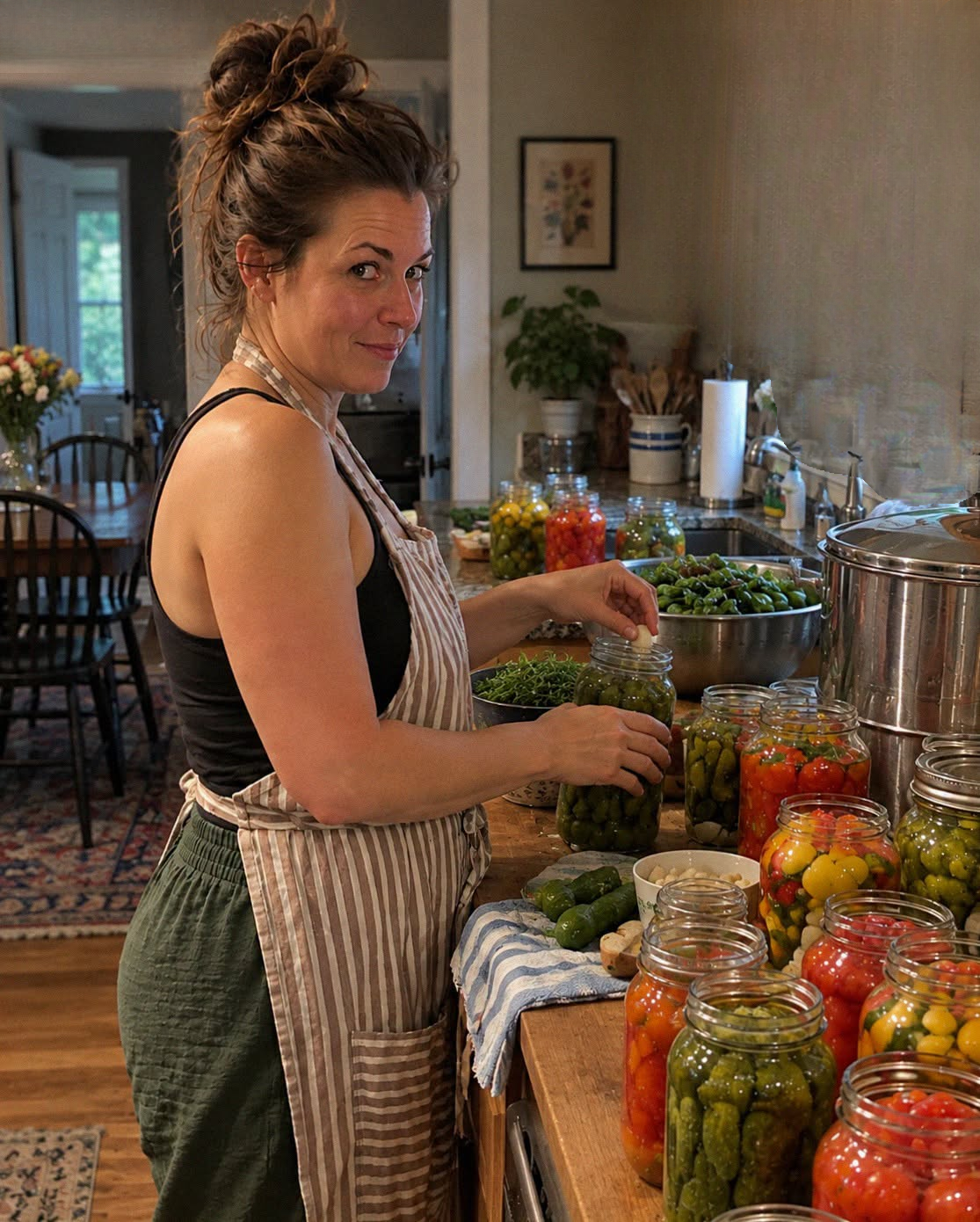
For 11 years, my wife, Claire, made homemade pickles and forbade me from touching them. I thought it was a strange family tradition—until I opened a jar and discovered a wedding ring hidden inside a tiny capsule.
Thirteen jars sat separately on a basement shelf. Each contained something silver, and several held wedding rings. When Claire came home and saw what I’d found, she went pale.
“These women trusted me,” she whispered.
Her grandmother had once opened her home to women who were frightened, alone, or desperate for somewhere safe. Claire had continued that tradition, helping women escape abusive marriages and rebuild their lives. Some had entrusted her with their wedding rings as they prepared to leave their pasts behind.
Then I recognized one of the rings.
It belonged to my younger sister, Emily—the sister I hadn’t spoken to in five years.
Emily had married Ryan, a man our family adored. But behind closed doors, he controlled her, isolated her, and threatened her. When Emily begged me for a place to stay, I dismissed her fears and told her to work things out with her husband.
She stopped calling. Eventually, she disappeared.
I’d always believed she’d abandoned us. The truth was that she’d reached out to Claire, who believed her, helped her find safety, and promised to protect her secret.
“You knew where she was all this time?” I asked.
“Yes,” Claire replied. “She was afraid you wouldn’t believe her.”
Her words broke something inside me because I knew she was right.
Then I noticed another jar—one with a fresh white label. Inside was a silver wedding band with three tiny diamonds.
My wedding ring.
Claire had taken it off four months earlier.
She explained that she’d spent years trying to tell me she felt lonely and unheard. Every time she opened up, I dismissed her feelings, made excuses, or promised to change without following through.
“I’m tired of proving I’m hurting before you start caring,” she said.
For the first time, I understood that our quiet marriage hadn’t necessarily been a happy one. Claire had simply stopped telling me how much she was hurting.
That night, I listened without interrupting. I apologized, but Claire made it clear that words alone weren’t enough.
The next morning, I wrote Emily a letter. I admitted that when she’d needed her brother, I’d given her advice instead of safety. I didn’t ask her to forgive me. I only told her I was sorry.
Three weeks later, my phone rang.
“Archie?” a familiar voice whispered.
It was Emily.
She told me she’d sat in her car for nearly an hour after I refused to let her stay, hoping I’d call back.
“I wasn’t asking you to fix my marriage,” she said through tears. “I just needed my brother.”
We cried together. She didn’t promise everything was forgiven, but she agreed that we could talk again the following week.
Claire and I began marriage counseling. I started learning to listen instead of defending myself, while understanding that rebuilding trust would take time.
Claire still hasn’t put her wedding ring back on. I don’t know whether she will.
But one Sunday, while she was making pickles again, she handed me an apron and asked me to help.
As we washed cucumbers side by side, I remembered what her grandmother had taught her: every woman deserves a place where she can speak and know someone is listening.
For 11 years, Claire had created that place for strangers.
Now, I was finally learning how to make our home that place for her, too.