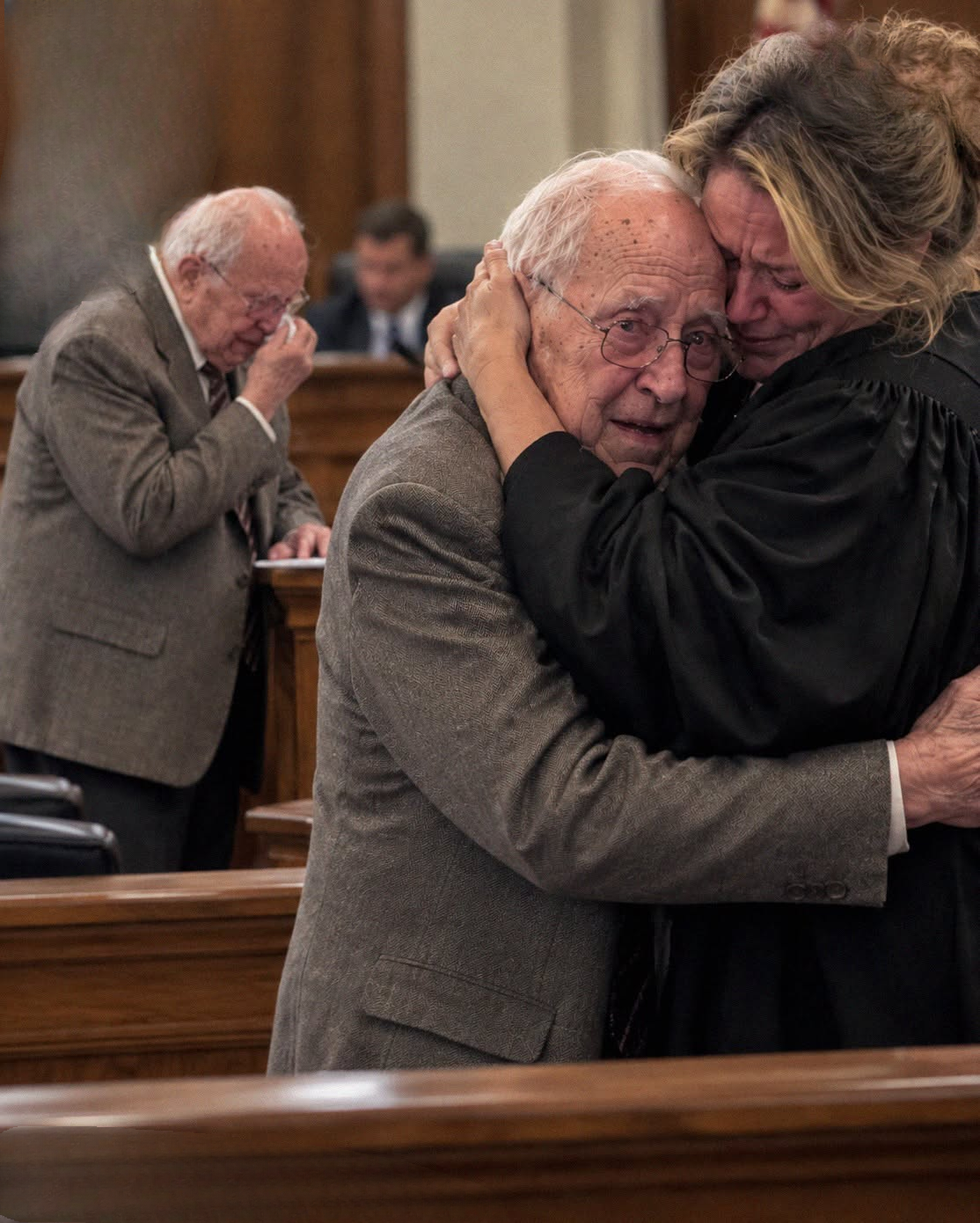
Walter was 101 years old when he stood before a judge, accused of stealing more than $2,000 worth of groceries, baby clothes, and school supplies.
The judge couldn’t understand why a man his age would risk going to prison.
“Why did you keep stealing, even after the stores warned you?” he asked.
Walter gripped his cane and quietly replied:
“I’m guilty, Your Honor. I have no excuse.”
I had lived next door to Walter for 30 years, and I couldn’t let him face the judge without telling the truth.
“Your Honor, there’s something you need to know.”
I pointed toward a young woman sitting in the back row with a little boy asleep against her shoulder.
Her name was Sarah. She was raising three children alone after her husband abandoned the family. She worked cleaning offices, but often struggled to afford even basic groceries.
For months, Walter had been secretly leaving food, clothes, and school supplies at her door.
He had told Sarah he was buying everything with his pension. But the truth was much more painful.
The story began the previous winter, when Walter became seriously ill. His wife had died years earlier, and he had no close family nearby.
Sarah noticed that his curtains hadn’t opened for two days. When she checked on him, she found him too weak to prepare a meal.
From that day forward, she began bringing him dinner almost every evening.
Walter thought she was simply sharing leftovers.
But one evening, he asked Sarah whether she had eaten. She smiled and said she wasn’t hungry.
A few days later, her oldest daughter revealed the truth.
“Mom says she’s not hungry again. She says we need the food because we’re still growing.”
Walter was devastated when he realized Sarah had been giving him food her own children needed.
He tried to repay her, but she refused to accept money.
So he began buying groceries and supplies for her family. When his savings ran low, he sold his old watch and other belongings.
Eventually, desperate to keep helping the children, he began stealing.
The courtroom fell silent as I explained everything.
Sarah started crying.
“Walter, I never asked you to do this.”
“I know, sweetheart,” he replied. “But you fed me when I had nobody. I couldn’t watch your children go without.”
Then Sarah stood up and revealed something Walter had never known.
“My children call him Grandpa Walter. Every evening, we set five places at our dinner table. One for me, three for the children, and one for him.”
Walter looked at her in disbelief.
“They call me Grandpa?”
Sarah nodded.
“They were saving you a seat long before you ever brought us groceries. We don’t just need your help, Walter. We need you.”
The judge postponed sentencing so a restitution plan could be arranged. I promised to ask our neighbors to help cover the store’s losses and support both households.
But Walter seemed to hear only Sarah’s words.
A few weeks later, I visited her home and found him sitting at the kitchen table.
There were five plates.
Her youngest son climbed into the chair beside Walter and took his hand.
“Grandpa Walter, you don’t have to bring us anything anymore.”
Walter smiled through his tears.
“Then what should I bring?”
The little boy answered:
“Just yourself.”
For years, Walter had believed he had nobody left in the world.
Now he had a family saving him a place at their table.
And all they wanted was for him to come home.