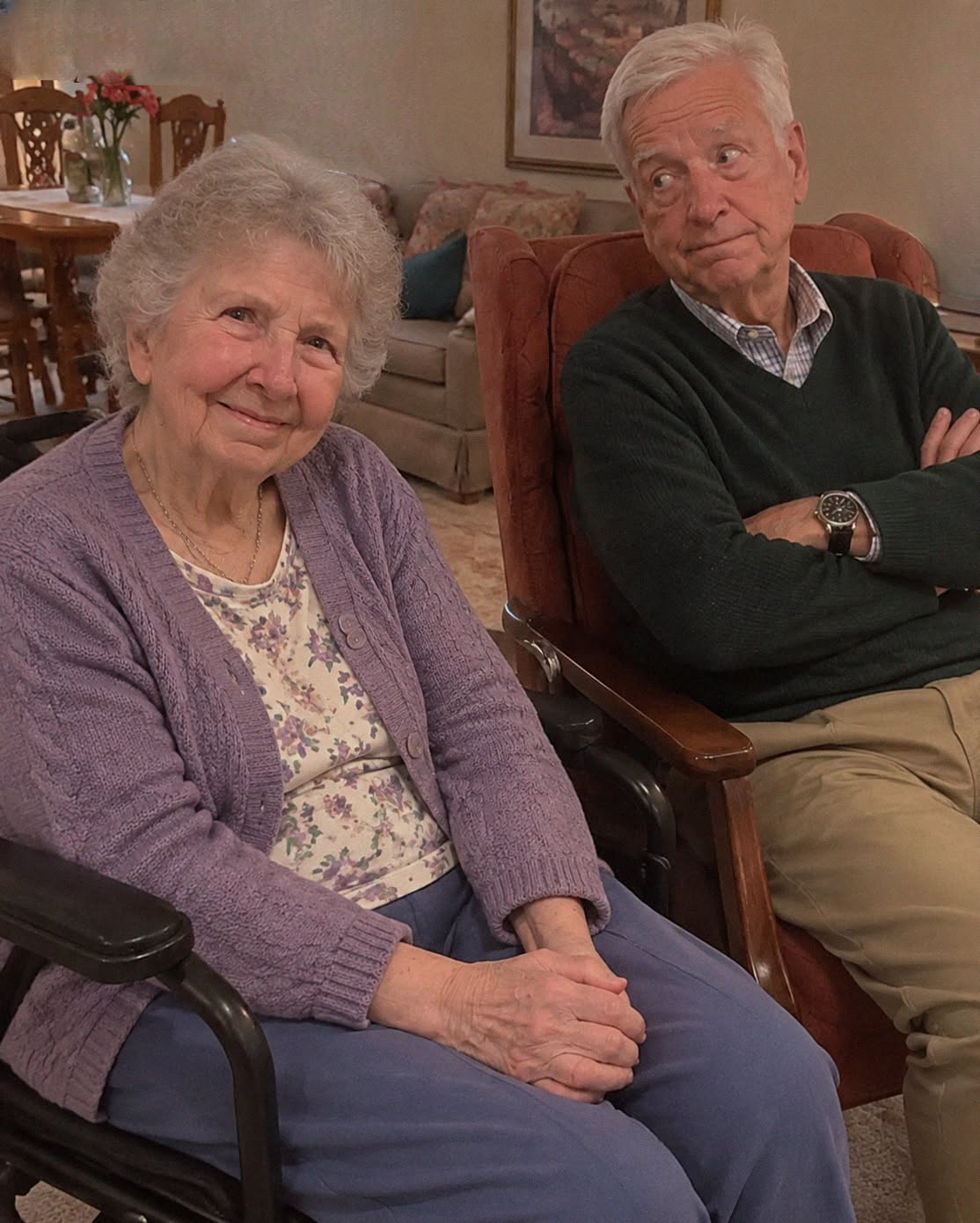
The first time Grandpa forgot Grandma’s birthday, she laughed.
The last time, she couldn’t remember it herself.
After nearly 48 years of marriage, Grandma Eleanor was diagnosed with Alzheimer’s disease. She began forgetting small things, repeating questions, and struggling with everyday tasks.
But instead of supporting her, Grandpa Arthur became increasingly impatient.
For years, Grandma had taken care of everything: cooking, cleaning, appointments, bills, and even remembering his medication. Grandpa had grown accustomed to having someone handle every part of his life.
When her condition worsened, he made a shocking announcement.
“I’m still young enough to enjoy life. I won’t spend the rest of it babysitting my own wife.”
He divorced her, moved on, and stopped visiting after she entered a care facility.
Less than a year later, he married Melissa, a woman 30 years younger.
He told everyone he deserved a fresh start.
Almost two years later, Grandpa called me, trembling with anger.
“Melissa sold my car and left me!”
The vintage convertible had been his pride and joy. But there was one important detail: he had given it to Melissa as a wedding gift and put it in her name.
When I met her, she explained that she had discovered the truth about his previous marriage. He had told her he spent years caring for Grandma, but she learned that he had abandoned her without even visiting.
Melissa also described how Grandpa expected her to cook, clean, iron his clothes, and cancel her own plans whenever he wanted.
“He hadn’t changed,” she told me. “He’d just found someone new to do everything for him.”
She eventually left, sold the car that had been legally gifted to her, and used the money to find somewhere to live.
Suddenly, Grandpa was alone.
He couldn’t find his medication, his laundry piled up, and he struggled to prepare even a simple meal.
The man who had mocked Grandma for writing reminders now had a calendar covered in instructions just to manage his own day.
But the biggest revelation was still waiting.
While helping Mom sort through Grandma’s belongings, I found her old green notebook. Inside was a letter written two years before her diagnosis.
It began:
“To myself, if I ever find the courage.”
Grandma had secretly considered leaving Grandpa long before he left her.
She had even looked at an apartment and imagined a different life.
But then she wrote something that broke my heart:
“I almost told Arthur I was leaving. Then he couldn’t find his medicine again. I couldn’t bear the thought of him alone, wondering who would look after him.”
She had stayed because she worried about him.
The same man who eventually abandoned her when she needed him most.
I showed Grandpa the letter.
He read it silently, his hands trembling.
“She wanted to leave me?”
“She thought about it,” I replied. “But she stayed because she worried about you.”
He looked around his messy kitchen.
For once, he had nothing to say.
Later, he asked whether he could visit Grandma and apologize.
I warned him that she might not remember him, and that he couldn’t expect forgiveness.
Still, he wanted to go.
When we arrived, Grandma was sitting by the window, folding a towel.
Grandpa approached slowly.
“It’s Arthur,” he whispered.
She smiled politely.
“That’s a nice name.”
He placed an old anniversary photograph between them.
“Remember this?”
Grandma studied it.
“She looks happy,” she said.
Grandpa’s eyes filled with tears.
“I was a terrible husband,” he whispered.
She looked confused, then gently offered him the towel.
“Could you help me?”
For decades, Grandma had folded his clothes. He couldn’t remember the last time he had helped her.
This time, he took the towel and carefully folded it.
She smiled.
“Thank you.”
Grandpa began to cry silently.
He couldn’t give back the years she’d spent caring for him. He couldn’t undo the divorce or make her remember their life together.
But when Grandma reached for another towel, he quietly reached for one too.