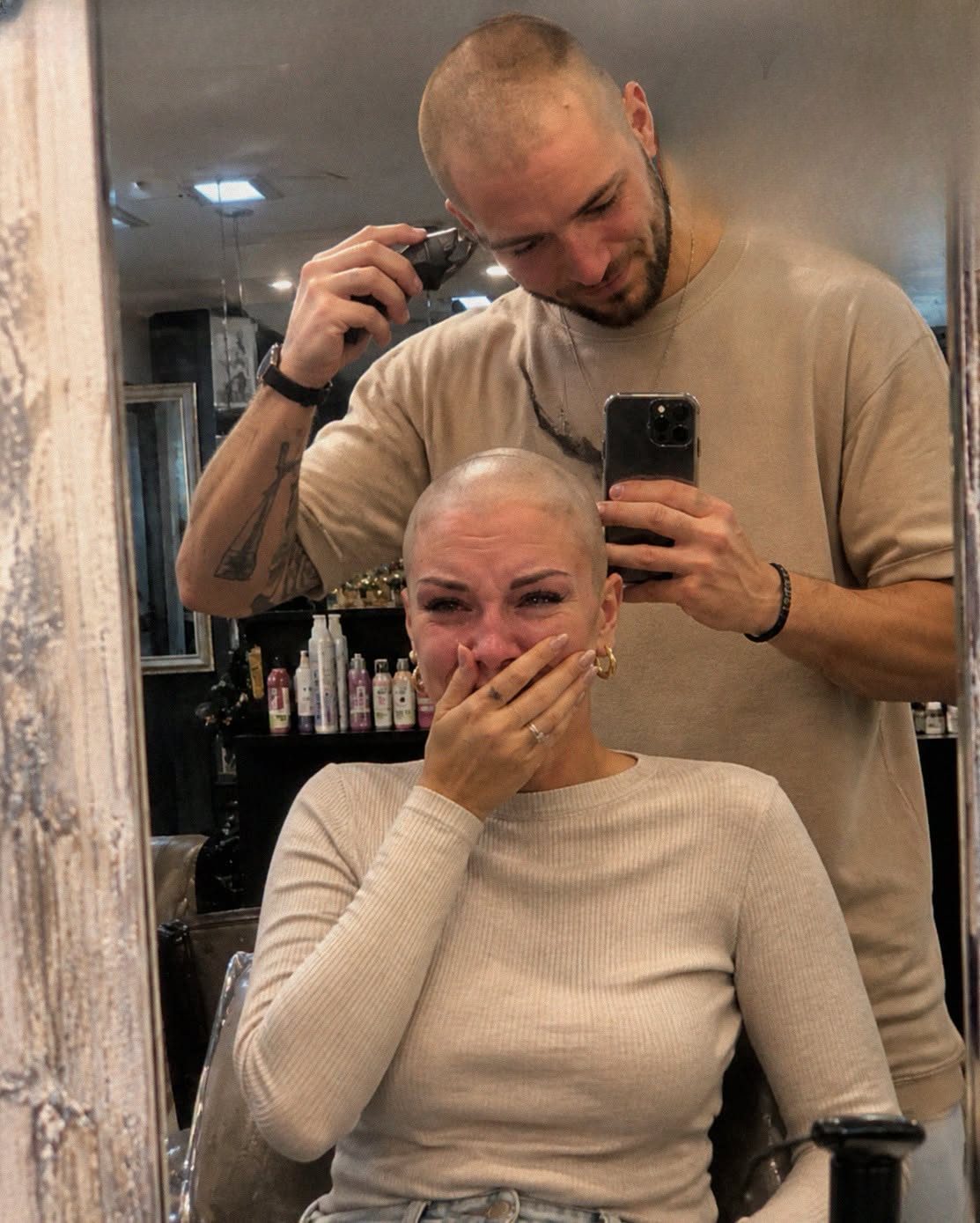
I shaved my head to support a wealthy woman who was losing her hair during chemotherapy. I thought I’d simply made her feel less alone. But the next morning, her furious husband stormed into my salon with two bodyguards.
“You’re going to pay for flirting with my wife!”
My name is Belle. I’m 25, an orphan, and a hairstylist at a small women’s salon. I’ve spent my life working hard just to support myself.
The previous afternoon, Victoria, one of our regular customers, arrived wearing a silk scarf. She looked pale and exhausted. When she removed it, I saw how much hair she’d lost during chemotherapy.
“Please shave it all off,” she whispered, fighting back tears.
As I shaved her head, she apologized for crying.
“It’s your hair,” I told her. “You’re allowed to be upset.”
When I finished, she stared at herself in the mirror.
“I look terrible.”
“You look like someone who’s fighting very hard.”
Then I noticed my spare clippers. Without thinking twice, I took off my cap and began shaving my own head.
“Belle, what are you doing?” she cried.
“Making sure you’re not the only beautiful bald woman here.”
Victoria hugged me, laughing through her tears. Before leaving, she asked for a photograph of us together. I refused to take payment and promised to help her find a beautiful wig.
I thought I’d made her day a little brighter.
I never expected what would happen next.
That evening, her husband, Richard, called me. He demanded to know why I’d shaved my head and accused me of having feelings for his wife.
The next morning, he entered the salon with two enormous men.
“You’re going to pay for flirting with my wife!”
“I’m a woman,” I replied, confused.
He ignored me and accused me of taking advantage of Victoria. Then he threatened my job and asked how much I valued working at the salon.
I refused to apologize for helping someone.
June, my coworker, reached for the phone to call the police. But before she could, the door opened.
Victoria stood there.
“Richard, what have you done?”
She demanded to know why he was frightening me. When he claimed he was protecting her, she reminded him that I’d refused her money and had shaved my own head simply to make her feel less alone.
Then Victoria revealed something that made the entire room go silent.
Richard had contacted the salon’s property manager that morning, trying to interfere with the lease renewal and threaten our livelihoods.
But Victoria had already investigated. The property manager hadn’t agreed to anything, and the renewal discussions were still continuing.
Then she explained why Richard had become so angry.
After her cancer diagnosis, Victoria had decided to use some of her personal money to help other women undergoing chemotherapy pay for wigs and hair care. Richard opposed the idea. He thought she was being emotional and didn’t want her spending the money.
When Victoria came home smiling after meeting me, she told him about our photograph and how I’d refused payment.
Instead of being happy for her, he accused me of trying to make myself important in her life.
“You’re angry because I found someone who understood why I wanted to help other women,” Victoria told him.
Richard finally admitted he was afraid of losing her.
“I know you’re scared,” she replied. “But fear doesn’t excuse cruelty.”
She demanded that he apologize to me for the accusations, intimidation, and threats against our jobs.
After a long silence, he finally did.
Then Victoria told him to leave. She wasn’t finished with her plans.
A week later, she returned to the salon carrying a folder. Inside was a proposal for a program helping women undergoing chemotherapy receive wigs and professional hair care.
She had spoken with the salon owner, who agreed to participate.
Then she turned to me.
“Belle, I’d like you to coordinate the appointments and help these women find what makes them feel beautiful again.”
I was stunned.
She wasn’t offering me charity. She was trusting me with something meaningful.
I accepted.
Our first appointment was with a woman who had been avoiding mirrors since starting treatment. I helped her try on several wigs until she found one she loved.
When she finally smiled at her reflection, Victoria whispered, “That’s what I wanted.”
A few weeks later, Richard sent me a written apology. Victoria told me they were attending counseling, although rebuilding trust would take time.
Meanwhile, the program continued helping women who needed support.
One afternoon, Victoria visited the salon and touched my short, growing curls.
“Look at you,” she laughed.
I smiled. “Yours is coming back, too.”
She took my hand.
“I thought I came here that day to lose something. But I found something instead.”
I looked around the little salon and realized something.
I’d spent most of my life believing that having no family meant facing everything alone.
But Victoria had stood up for me when my livelihood was threatened, just as I’d stood beside her when she couldn’t bear to look in the mirror.
We hadn’t helped each other with money or grand promises.
We had simply refused to let the other woman stand alone.