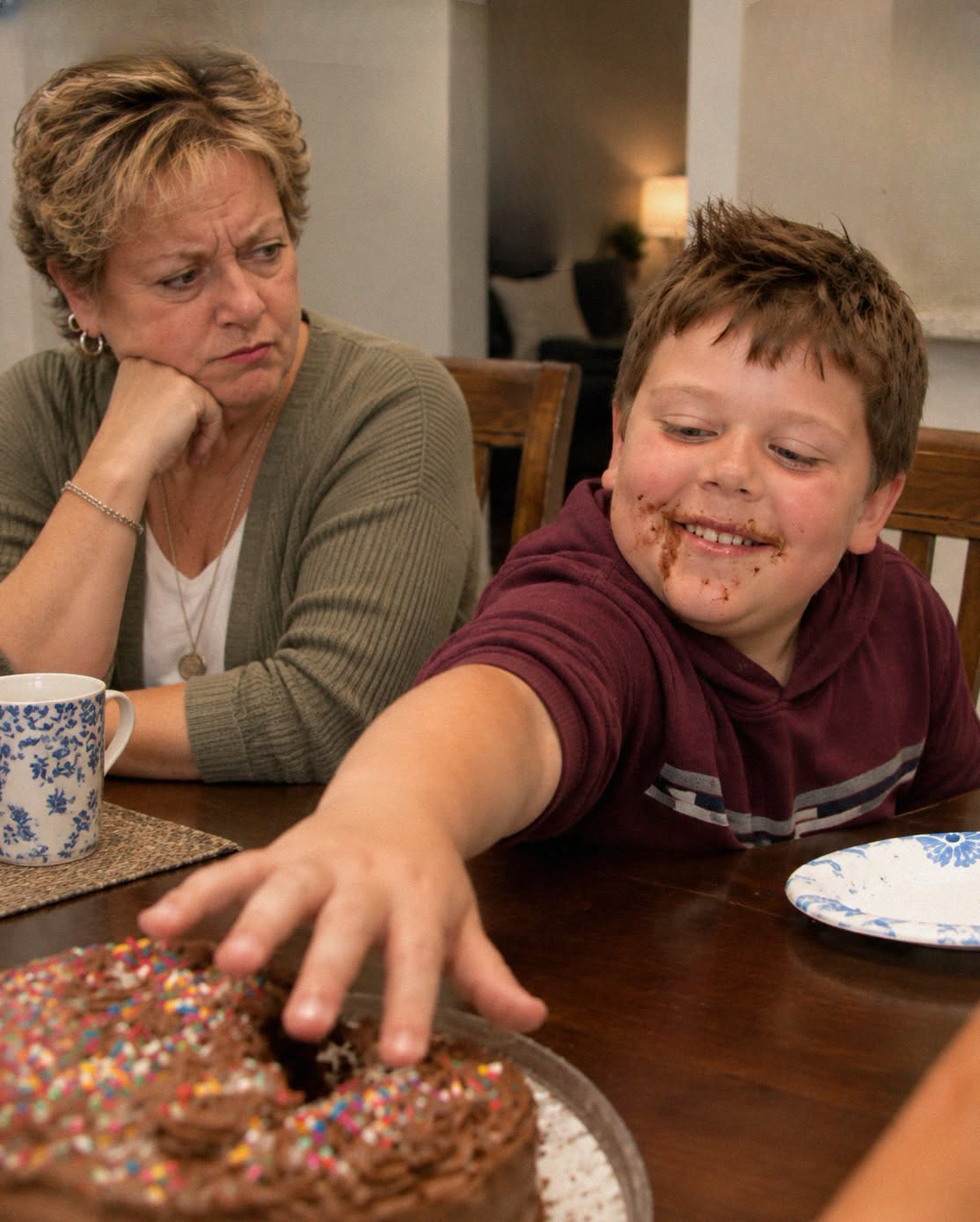
I thought the worst part of my mother-in-law’s birthday dinner was watching her humiliate my seven-year-old son in front of 20 relatives. But what my husband later discovered inside Oliver’s little dinosaur backpack broke our hearts.
Oliver loved dinosaurs, soccer, and chocolate cake. He also adored his grandmother, Patricia.
At her 70th birthday dinner, he’d brought a handmade card he’d spent hours creating. He planned to give it to her after dessert.
But when he reached for a slice of cake, Patricia laughed.
“Slow down, sweetheart! You’re getting a little too curvy!”
Some relatives chuckled.
Oliver froze.
“Grandma, I’m not fat,” he whispered, pulling his shirt down over his stomach.
Patricia laughed again.
“Look at that belly! You look six months pregnant!”
“Patricia, he’s seven,” I said. “Stop embarrassing him.”
My husband, David, put down his fork.
“Mom, can I ask you one question? Why do you keep making jokes about Oliver’s stomach when you know what the doctor told us?”
Her smile disappeared.
Three weeks earlier, Oliver had started experiencing stomachaches and swelling. His pediatrician ordered tests, and we’d just had an ultrasound. We were waiting for the results.
Patricia knew everything.
Then Oliver suddenly pushed back his chair.
“Mommy, my tummy hurts again.”
His face had gone pale.
My phone rang. It was our pediatrician.
“Sarah, take Oliver straight to the emergency department. His scan showed something concerning. Don’t wait until morning.”
David immediately lifted Oliver into his arms.
At the hospital, Oliver kept asking whether he’d done something wrong.
“No, sweetheart,” I told him. “You haven’t done anything wrong.”
Doctors later explained that the scan showed a mass near one of his kidneys. More tests and specialist examinations were needed.
While Oliver rested, I noticed something heartbreaking. He kept pulling his hospital gown down over his stomach and didn’t want anyone looking at him.
That night, he told me something I’d never forget.
“Grandma used to let me sit on her lap and read dinosaur books. Now she says I’m too big.”
He also admitted that she’d stopped calling him her little Teddy Bear.
The next morning, I confronted David about how long his mother had been making comments about Oliver’s body.
He confessed that Oliver had told him weeks earlier that the jokes hurt. David had spoken to Patricia, but she’d cried and promised to stop.
Instead of confronting her again, he’d told Oliver that Grandma loved him and that he shouldn’t take the jokes seriously.
I was furious.
Our son had been hiding his feelings because he didn’t want to upset anyone.
Then Oliver said something even more painful.
“Grandma cried the last time Daddy told her to stop teasing me. I didn’t want her to cry again.”
He was only seven, yet he believed it was his responsibility to protect the adults from feeling sad.
A little later, David opened Oliver’s dinosaur backpack to find his favorite toy.
A folded yellow birthday card slipped out.
It was the card Oliver had made for Patricia.
On the front was a drawing of her favorite chair beside the window. A little boy was sitting on her lap, wearing an old dinosaur shirt.
David opened it.
Inside, Oliver had written:
“Happy Birthday, Grandma.
I wish I could be little again so you could hold me like before.
I still love you.”
I read it twice.
At the very dinner where he’d planned to give her that card, she’d made everyone laugh at his body.
David sat beside Oliver’s bed, holding the card.
“I thought she was just teasing him,” he whispered.
“He told you it hurt,” I replied.
“I know. I should have listened.”
Later that afternoon, Patricia arrived at the hospital carrying clean clothes and Oliver’s favorite crackers.
She asked to see him, but David stopped her.
Instead, he handed her the yellow card.
“Read this first.”
She opened it, saw the drawing of her old chair, and began crying.
“That’s my Teddy Bear,” she whispered.
Then she read the words inside.
“Why did he think I didn’t want to hold him anymore?”
David looked at her.
“Because you kept telling him he was too big. Why did he think he had to become smaller to get his grandmother back?”
Patricia had no answer.
She insisted she’d only been joking, but David finally made something clear.
“He’s the one who’s sick, Mom. This isn’t about making you feel better.”
She left without seeing Oliver.
Later, David sat beside our son and apologized.
“I should have listened when you told me Grandma’s jokes hurt.”
Oliver looked at him.
“I didn’t want her to cry.”
“Grown-ups are allowed to be sad, buddy. It’s not your job to stop them.”
Then David promised him something important:
“You can tell me whenever someone makes you sad. Even if it’s Grandma. Even if it’s me.”
The weeks that followed were difficult. Further examinations confirmed that Oliver had a serious growth near his kidney, and he needed treatment.
Patricia continued sending messages, but David stopped arranging visits unless Oliver wanted them.
Eventually, Oliver agreed to see her.
She arrived without gifts and sat beside him.
“I’m sorry I made jokes about your tummy. I was wrong. You didn’t deserve that.”
Oliver looked at her.
“Do you still think I’m too big for your chair?”
Patricia’s eyes filled.
“Never, sweetheart. You can sit beside me or on my lap if you want. You get to choose.”
Oliver didn’t hug her that day.
But he asked whether she still had his dinosaur books.
Over time, their relationship slowly improved. Patricia stopped commenting on his body and learned to respect his boundaries.
Sometimes Oliver wanted her to read. Sometimes he didn’t. She learned not to demand hugs or affection.
Months later, after a good day following treatment, we celebrated at home with chocolate cake.
Oliver sat beside Patricia, showing her a dinosaur drawing.
When I brought out the cake, he pointed to a slice.
“I want that one. The dinosaur with the biggest head!”
David handed it to him.
Oliver took a bite and continued talking about dinosaurs.
His shirt stayed where it was.
And nobody at that table had anything to say about his stomach.