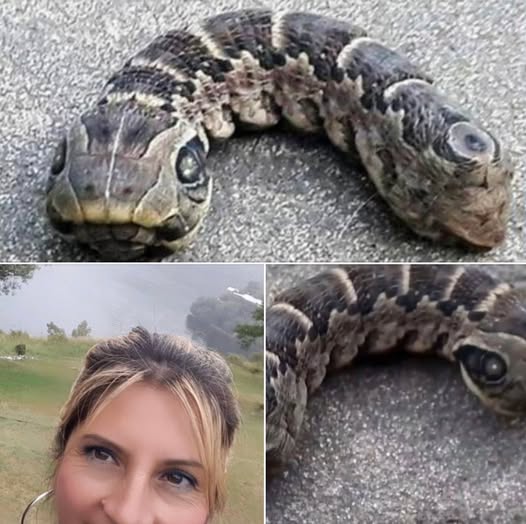
In the quiet town of Santa Fe, Argentina, 46-year-old Lujan Eroles was shocked to find a bizarre, snake-like creature in her garden. What she thought was a snake turned out to be a 10-centimeter caterpillar mimicking one—a rare example of nature’s mimicry.
Startled, Eroles screamed, fearing it might be poisonous. Her neighbors gathered as she described its strange eyes and lifelike snake features. “I’ve never seen anything like it,” she told National Geographic. Fearing it was a mutant, they filmed it and shared the footage online.
The video quickly went viral, drawing widespread curiosity. Experts eventually identified the creature as a caterpillar of a rare moth species, likely the Elephant Hawk-Moth, known for its defense mechanism: mimicking a snake to deter predators. Its eye-like markings and body shape create an illusion of danger despite its harmless nature.
Eroles’ unexpected discovery highlights the extraordinary ways in which wildlife adapts to survive—and offers a fascinating glimpse into the creativity of evolution.