
A Bikini’s Bold Legacy
One small swimsuit sparked global outrage, bans, and even arrests. In the clash between modesty and freedom, the bikini became both villain and victor — denounced by popes, outlawed by governments, yet embraced by women rewriting social norms.
Early Beach Modesty
In the early 1900s, swimsuits were woolen, full-body coverings. Strict dress codes were enforced on U.S. beaches, with tailors adjusting garments and police measuring hemlines. Even revealing a knee was scandalous.
Annette Kellerman’s Stand
In 1907, Australian swimmer Annette Kellerman challenged norms with a one-piece swimsuit that exposed her arms and legs. Though allegedly arrested, she sparked a movement that led to growing acceptance of practical, form-fitting swimwear.
1920s: Function Over Fashion
The flapper era brought rebellious women like the “skirts be hanged girls” who demanded swimwear they could actually swim in. Slowly, styles became sleeker and more body-conscious.
The Bikini Arrives
In 1946, Louis Réard unveiled the bikini — a navel-baring two-piece named after Bikini Atoll’s atomic test site. The reaction was explosive: bans spread across beaches in the U.S. and Europe. Even Pope Pius XII called it sinful.
Controversial Photo
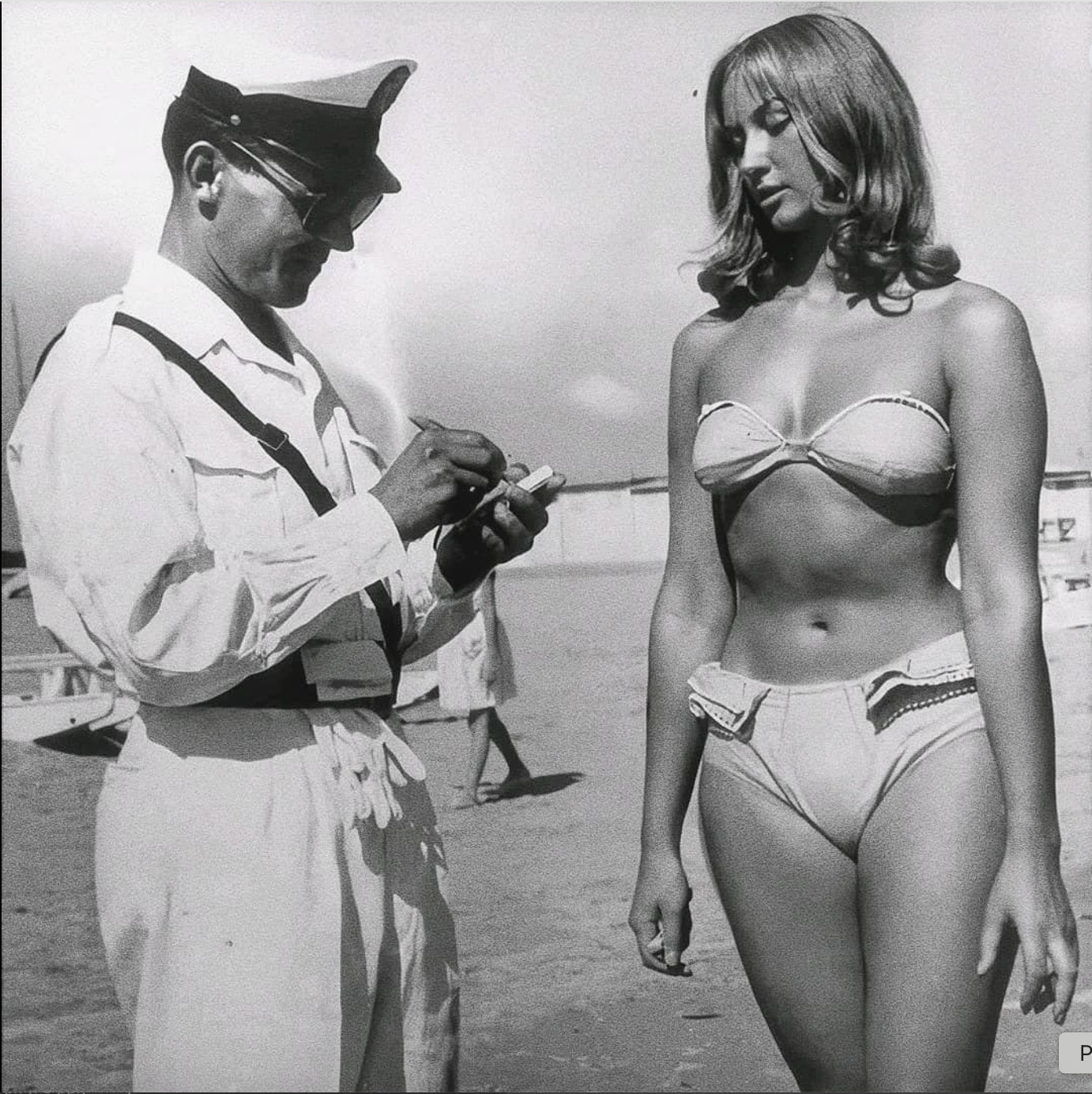
A 1957 photo of a bikini-clad woman beside a man in uniform in Italy went viral decades later, rumored to show her being ticketed for indecency. Though likely staged, it captured the era’s tension around women’s swimwear.
Hollywood’s Role
Despite censorship rules like the Hays Code, stars like Marilyn Monroe, Brigitte Bardot, and Ursula Andress helped normalize the bikini. Bardot’s role in The Girl in the Bikini and Andress’s iconic Dr. No scene gave the swimsuit cultural power and global recognition.
Today’s Swimwear Scene
By the 1970s, bikinis were mainstream. Now, swimwear celebrates diversity and self-expression — from modest suits to barely-there thongs — reflecting broader acceptance of all body types and personal choices.
