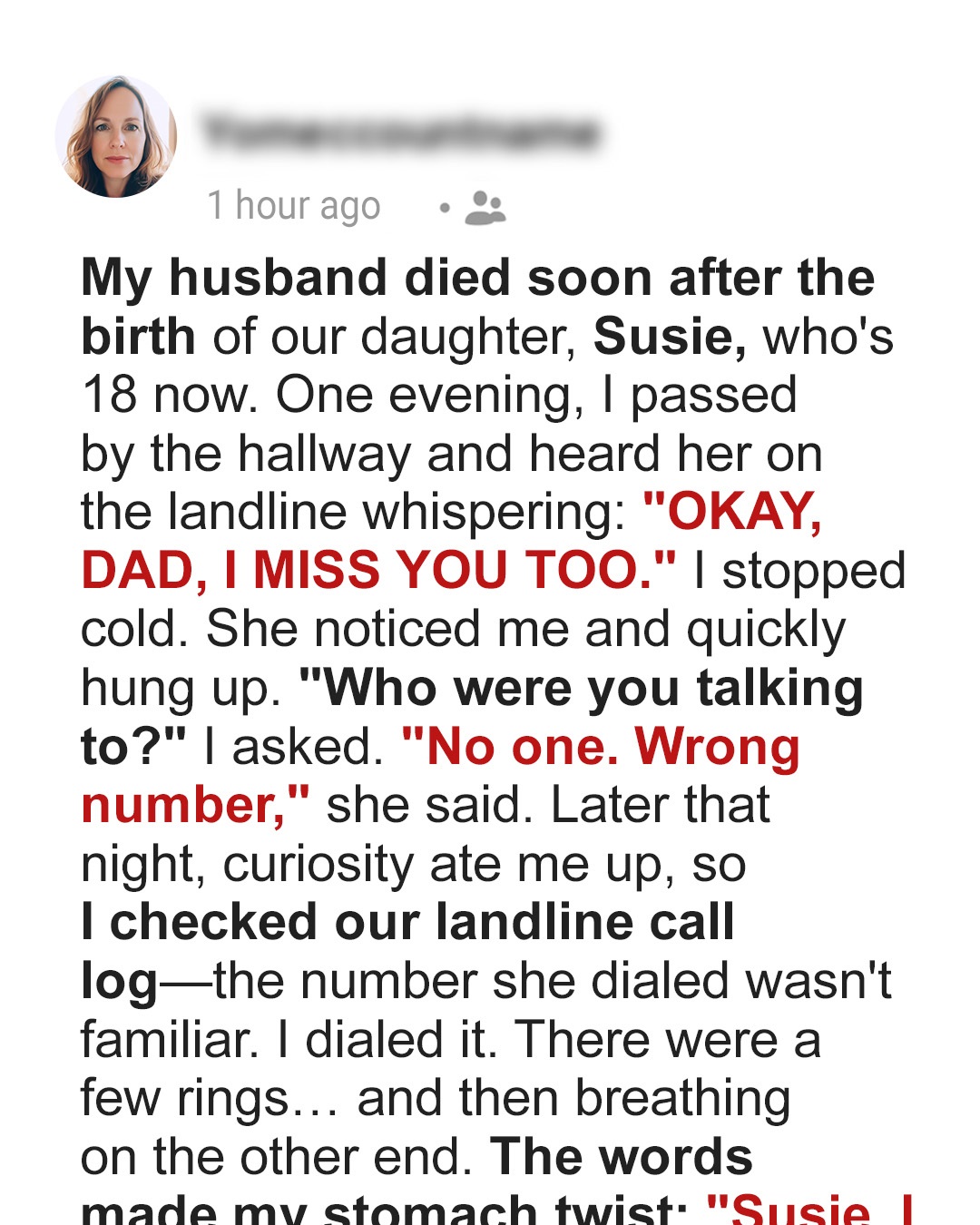
When Allie hears her daughter whisper, “I miss you, Dad” into the landline, everything unravels. Her husband, Charles, had died 18 years ago—or so she believed.
Back then, Allie was just 23, grieving with a newborn in her arms. She was told Charles died in a car crash. His mother, Diane, handled everything—closed casket, quick cremation. Allie never saw the body. Too broken to question, she let Diane take control.
Years passed. Allie raised Susie alone. The grief became routine. Susie grew curious about her father, but Allie offered only scraps of memory.
Then, one ordinary evening, Allie overhears Susie on the phone: “I miss you too, Dad.”
Panic. Denial. Then investigation.
The call log reveals a number. Allie dials. A man answers, expecting Susie. His voice—warm, familiar—stops Allie cold.
Charles.
Shock turns to confrontation. Susie confesses: she found Charles online months ago. He’d sent her a letter, claiming Diane helped him fake his death. He wasn’t ready to be a father. Diane convinced him staying gone was best—for all of them.
Allie meets Charles face-to-face. He’s older, full of regret. She doesn’t forgive him—but she demands he make amends, starting with 18 years of support. He agrees.
In time, Susie and Charles begin speaking. Tentatively. Honestly. Their connection grows—not in sweeping gestures, but in quiet, awkward conversations.
Allie watches from the sidelines, guarding her heart, but recognizing her daughter’s need for truth and healing. Forgiveness, for Susie, doesn’t erase the past—it softens it.
Charles isn’t a hero. He’s not even a villain. He’s a man who ran from love and now faces its consequences.
Some ghosts don’t haunt forever. Some return, quietly, hoping for a second chance.