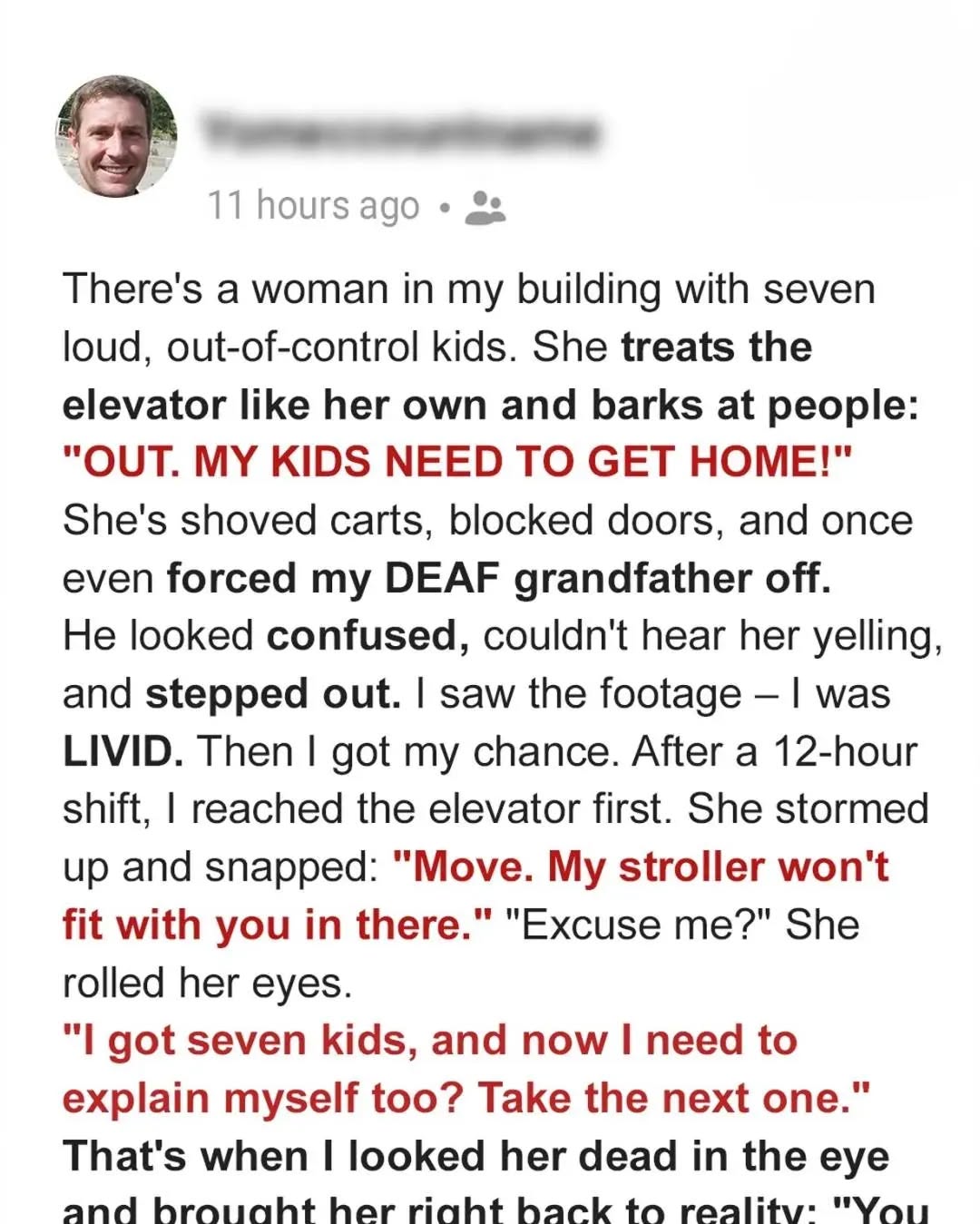
She ruled our apartment building like a queen—loud, entitled, and trailed by seven chaotic kids. Most neighbors stepped aside to avoid her wrath. I did too, until she kicked my deaf grandfather off the elevator.
The security footage told the whole story: Grandpa struggling to hold the door, her barking, “Out!” until he stepped aside, confused and clutching his groceries.
Watching that broke something in me. Two weeks later, after a brutal hospital shift, I found myself face-to-face with her again.
She barked at me to leave the elevator. I didn’t move.
“No,” I said firmly.
“I’m the guy whose deaf grandfather you bullied.” Her shock was palpable. I stood my ground while two neighbors slipped in behind her, silently showing support. That night, I posted the elevator footage on the building’s online forum with a simple title: This isn’t how we treat our elders.
The response was immediate and overwhelming.
Dozens of residents shared similar experiences—quiet frustrations, small humiliations, and outright rudeness. Suddenly, the truth was out, not cruelly, but honestly.
By Monday, everything had changed. She was quiet, polite, and waited her turn in the elevator.
The building felt lighter, calmer.
Neighbors smiled more, exchanged greetings, and even small courtesies seemed to return. Respect, it turned out, was contagious once someone dared to stand up for it. I didn’t do it for revenge.
I did it to remind her—and all of us—that respect is a shared responsibility.
Sometimes, it takes just one tired man and a firm, unwavering “No” to shift the balance. That day, the elevator became more than a passage between floors—it became a lesson in courage, community, and standing up for what’s right.