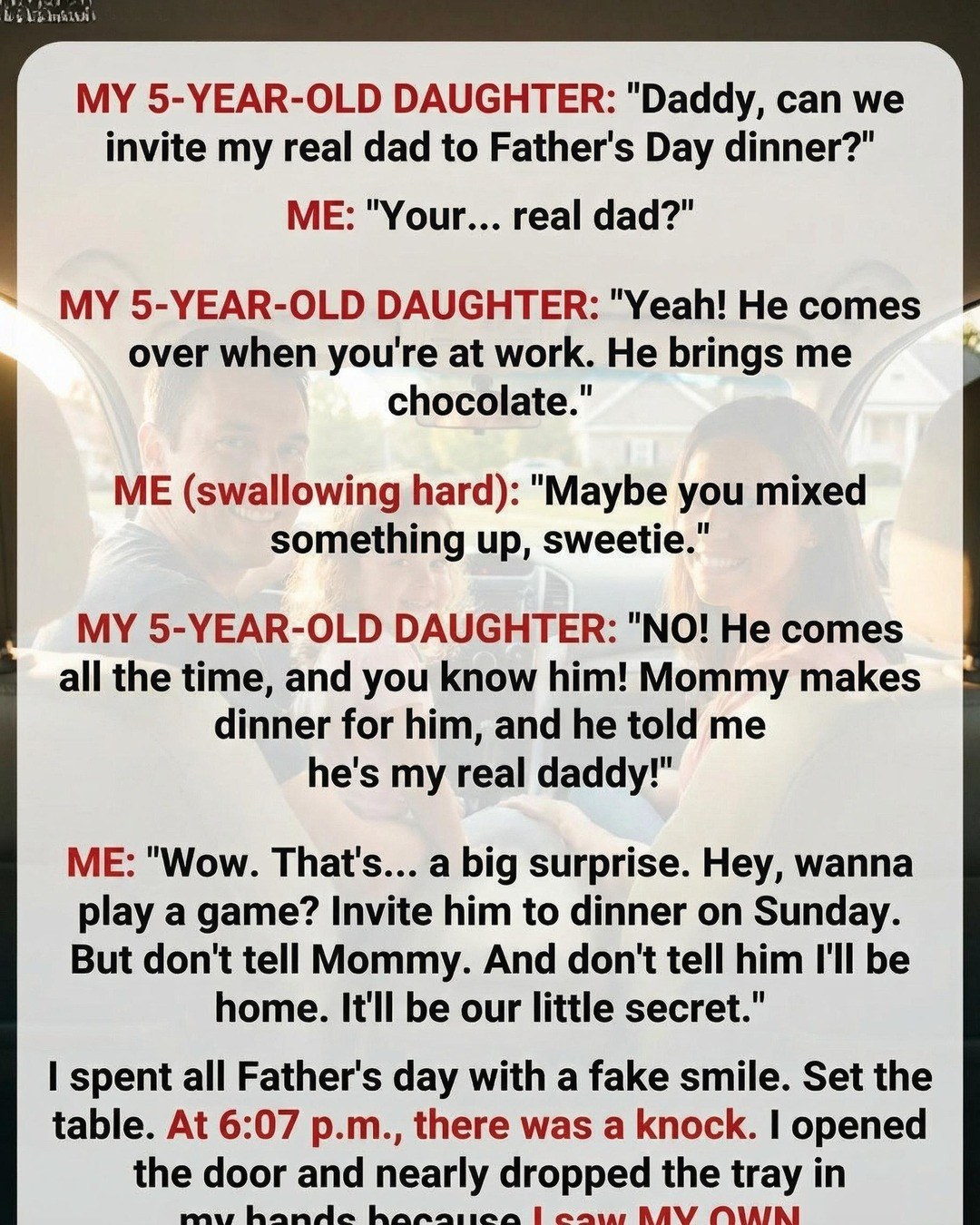
Lily, only five, swung her legs happily and explained that a man came by when I was at work, brought her chocolate, and sat with Mommy while they talked. She said Mommy cooked dinner for him sometimes, and that he told her he was her “real daddy.” My heart pounded, but I kept my voice gentle, telling her maybe she had mixed something up. She shook her head with absolute certainty.
That night, I barely slept, replaying her words again and again, trying to decide what was real and what was just a child’s imagination. By morning, I knew I needed the truth, but I couldn’t confront my wife without proof. I didn’t want to scare Lily or cause a scene based on a misunderstanding.
So I turned her story into a game. I told her, with a smile that felt glued on, to invite her “real dad” to our Father’s Day dinner but to keep it a secret from Mommy. Lily clapped, delighted by the idea of a surprise.
I spent the day moving like a ghost through the house, setting the table, cooking a meal I could barely taste, practicing calm breaths so my daughter wouldn’t see my fear. Every tick of the clock felt heavy. When 6:07 p.m.
arrived, there was a knock at the door. My hands trembled as I opened it. Standing there was a man about my age, holding a small gift bag with a chocolate bar peeking out.
His eyes widened when he saw me. For a moment, none of us spoke. Lily ran past me, shouting his name like she’d known him forever.
My wife appeared in the hallway, color draining from her face. The silence between us said everything. I invited him in, my voice surprisingly steady, and asked Lily to go wash her hands for dinner.
We sat at the table that night, not as enemies but as three adults trying to make sense of a painful truth for the sake of one little girl. There were no shouting matches, no dramatic exits—just quiet, difficult words and the agreement that Lily deserved honesty and stability. Over the weeks that followed, we worked through conversations with lawyers, counselors, and family members.