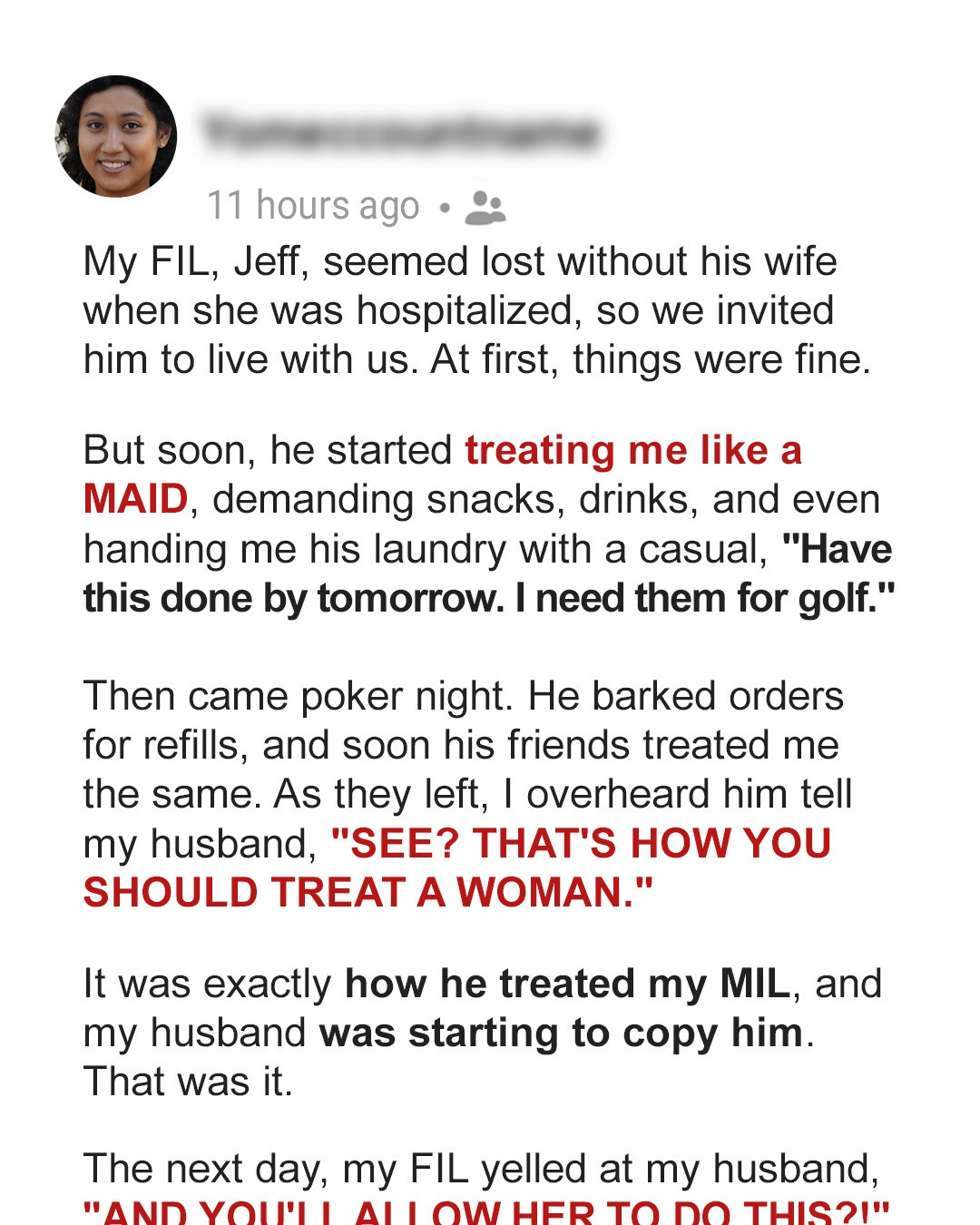
When my father-in-law, Frank, moved in after my mother-in-law, Sarah, was hospitalized, I thought I was helping. But soon, his dependence on me grew, testing my patience and marriage.
Frank had always relied on Sarah for everything, and without her, he was lost. When my husband, Brian, impulsively invited him to stay with us, Frank was grateful but soon became demanding. Little requests turned into regular tasks for me—making coffee, fixing sandwiches, even folding his laundry. Meanwhile, Brian seemed oblivious.
The tipping point came when Frank hosted poker night at our house without asking. By 8 p.m., the living room was full of loud, drunk guests, and I was serving snacks and drinks like a waitress. When Frank casually told me to fetch more beer, I snapped.
It wasn’t just about poker night—it was a pattern I’d seen before with how he treated Sarah. Soon, Brian started expecting the same. After a few more demands, I put my foot down, telling Brian I wasn’t his maid—and neither was I Frank’s.
I then created a “rental agreement” with clear rules: everyone contributes, no sexist behavior, and if you invite guests, you host them. When Frank protested, I stood firm. He could follow the rules or leave.
The next day, I nervously showed Sarah the agreement. To my relief, she supported it, admitting she had carried too much for years. When Frank returned, Sarah held him accountable, and for the first time, he started helping around the house.
Later, Brian asked if Frank would stick to it. I smiled, watching Frank dry dishes without argument. “This time, we’re all playing by the rules,” I said.