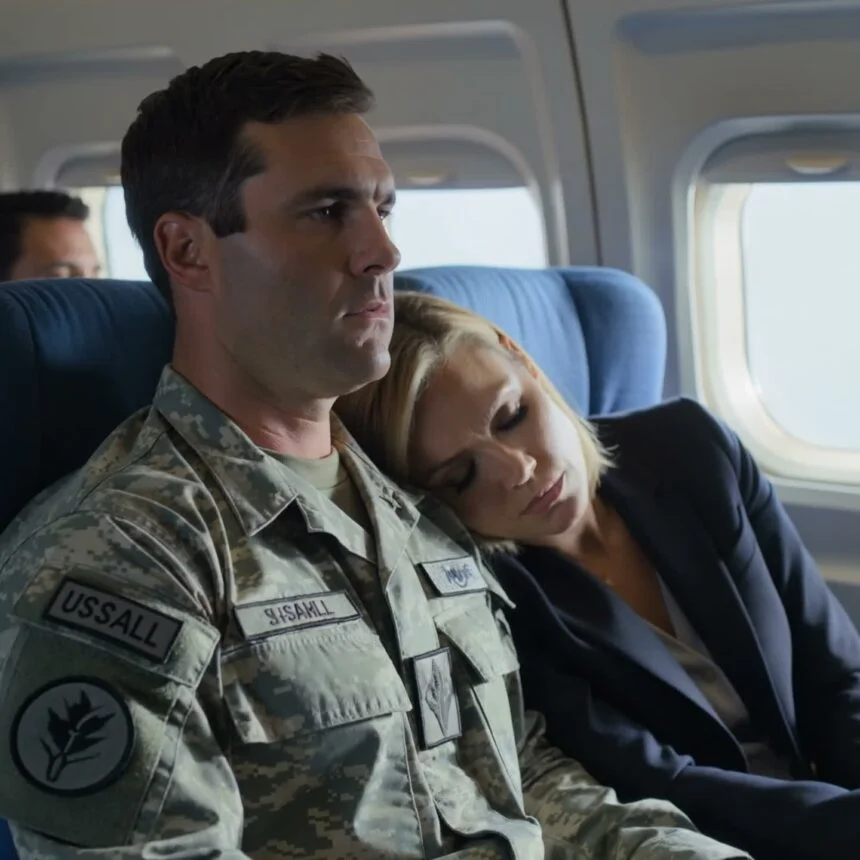
Victoria Hale, 38, was the youngest female CEO in defense tech, running a billion-dollar company with contracts across the military. Her life was all schedules, decisions, and control—no real rest, no real connection.
A mechanical issue forced her onto a commercial flight from San Diego to D.C., economy class. Exhausted from a grueling day pitching drone tech to Navy officials, she tried to work despite cramped conditions.
Next to her sat Evan Marks—a calm, quiet presence with the bearing of military training. When turbulence hit and her tablet flew, he caught it effortlessly, showing the skill of someone used to high-pressure situations. His composure and grounded nature unsettled her yet offered a rare sense of calm.
Hours later, Victoria found herself asleep on Evan’s shoulder—a first in years of constant vigilance. Upon waking, she noticed a photo in his hands: a younger Evan in Navy SEAL dress blues with his twin. He revealed he’d been a SEAL and now ran a private tactical rescue team.
During the flight, their conversation shifted Victoria’s perspective. Evan spoke of surviving loss, finding purpose, and responding rather than controlling everything. For the first time, she connected genuinely with another human being, beyond business strategy.
After landing, she tracked Evan’s company, Marks Tactical Recovery, and collaborated with his team to develop humanitarian tech—drones, communications, and medical gear—to save lives, not just serve profit-driven military contracts.
Months later, her new division enabled rescue missions in Syria, saving dozens. Victoria realized true success wasn’t just power or profit—it was using her skills to protect people. She still ran a billion-dollar company, but now with purpose, humanity, and perspective—less rigid, more alive.
It all began with a chance encounter on a delayed flight, a shoulder to rest on, and a lesson that letting go can be the strongest move of all.