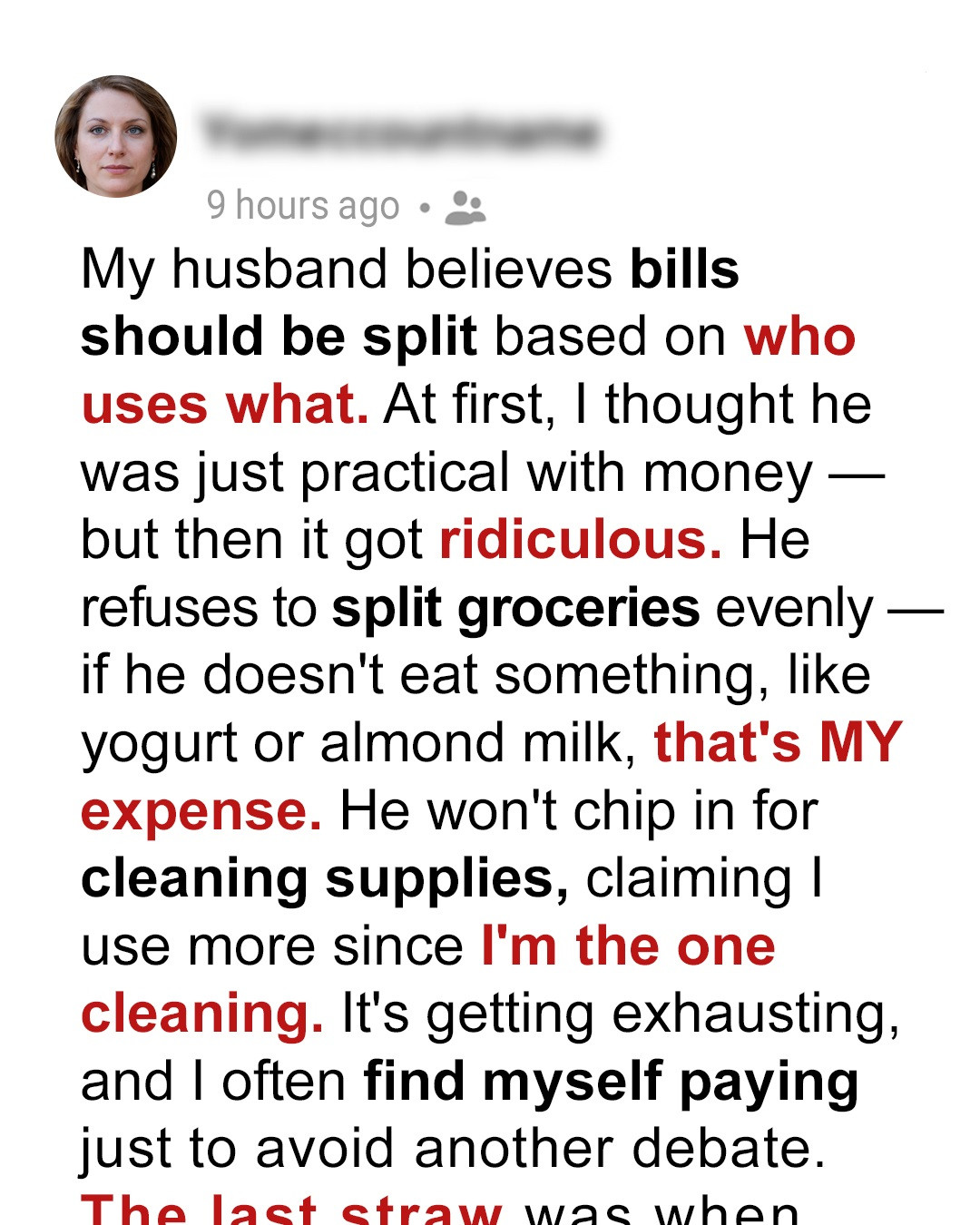
When finances in a marriage become constant negotiations, it turns into a transaction. Andrea realized this when her husband, Thomas, started micromanaging every expense. What began as a practical system of shared bills soon spiraled into an obsession with fairness—splitting every cost, even over small things like Wi-Fi or groceries.
In their first year of marriage, things had been smooth, with separate accounts and equal contributions. But slowly, Thomas’s view of fairness turned into nickel-and-diming. From gas bills to groceries, it was all about splitting costs based on usage. He even started Venmoing Andrea for her share of meals she cooked.
One day, Andrea received a Venmo request from Thomas for $20—charging her for using the Wi-Fi while working from home. This moment made Andrea realize how much Thomas treated their marriage like a business deal. The next day, she created an invoice, tallying up all the unpaid “services” she’d done around the house over the years—$20,254. She left it on his desk and packed a bag to stay with her sister.
When Thomas found the invoice, he was furious, but Andrea calmly explained that the problem wasn’t the money—it was how he had stopped seeing them as partners. She left that day, knowing the marriage was over. It wasn’t about the requests, but about how their connection had become transactional.