There’s a question that seems too simple to matter, but often reveals more than expected.
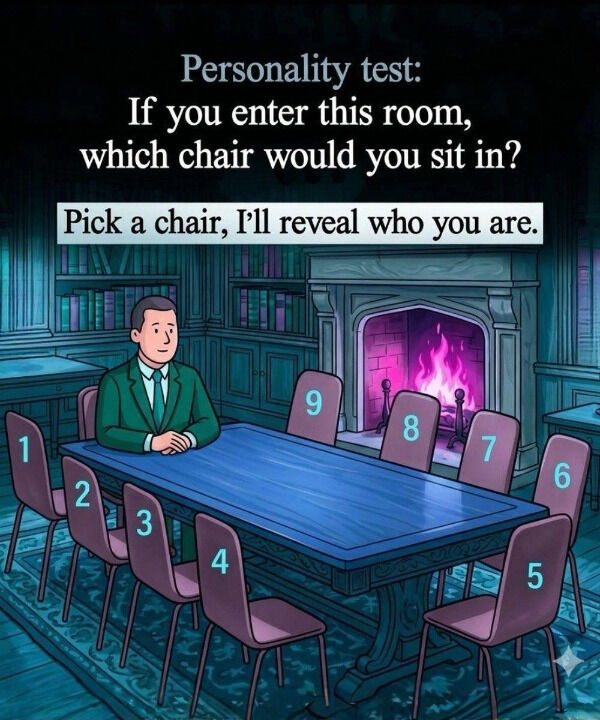
Imagine walking into a room. A long table, a soft fire at one end, nine empty chairs, and one person already sitting there.
The only question is: where do you sit?
No right answer—just your instinct.
What’s interesting is that this small choice can reflect how you relate to people, how you handle space, and what you naturally seek in social situations. It’s not about labeling personality, but noticing patterns you usually don’t think about.
We make these kinds of decisions every day without realizing it—how close we stand to others, where we sit in public, whether we choose quiet corners or open spaces. Because they’re instinctive, they’re often honest.
Sitting close: the connector
Choosing a seat near others suggests you’re naturally social and open. You likely feel energized by people, enjoy conversation, and help others feel included. Connection tends to come easily to you.
Middle distance: the balanced observer
Sitting neither close nor far suggests balance. You value both connection and space. You observe before engaging and prefer meaningful interaction over constant socializing. Quality matters more than quantity.
Farther away: the independent thinker
Choosing distance reflects independence. You’re comfortable alone, prefer depth over small talk, and think carefully before speaking. Solitude feels natural, not empty.
Near the fire: the comfort seeker
If you choose the warmest spot, you likely value calm, safety, and emotional comfort. You avoid tension when possible and often become a source of reassurance for others.
Facing the person directly: the confident one
Sitting straight across suggests directness and confidence. You’re comfortable being seen, value honesty, and communicate clearly without avoiding attention.
These patterns aren’t fixed. Your choice can change depending on your mood, your energy, or your current needs.
And that’s the point—personality isn’t one thing. It shifts, adapts, and responds to life.
In the end, small choices like this don’t define you—but they can quietly reflect you.
So again: in that room, at that table…
Where would you sit?