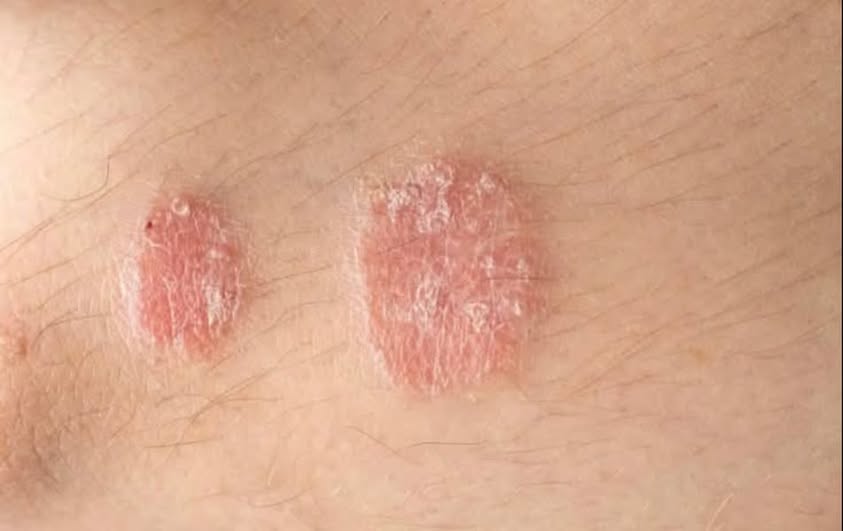
Psoriasis is more than a skin condition — it’s an autoimmune disease that causes skin cells to build up quickly, leading to itchy, scaly patches, redness, inflammation, and sometimes nail problems. It affects over 125 million people worldwide and can also impact sleep, concentration, and emotional wellbeing.
There are five main types of psoriasis:
- Plaque psoriasis – the most common type, causing thick, scaly red patches on areas like the elbows, knees, scalp, and back.
- Guttate psoriasis – often triggered by infections, appearing as small drop-like spots, especially in children and young adults.
- Inverse psoriasis – smooth, shiny red patches that develop in skin folds and worsen with sweat or friction.
- Pustular psoriasis – a more serious form with pus-filled blisters and symptoms like fever or chills.
- Erythrodermic psoriasis – the rarest and most severe type, causing widespread redness and peeling that may require hospitalization.
Psoriasis can also affect the nails, causing thickening, discoloration, or separation from the nail bed, which may signal psoriatic arthritis. Proper treatment and medical care are important to manage symptoms and prevent complications.