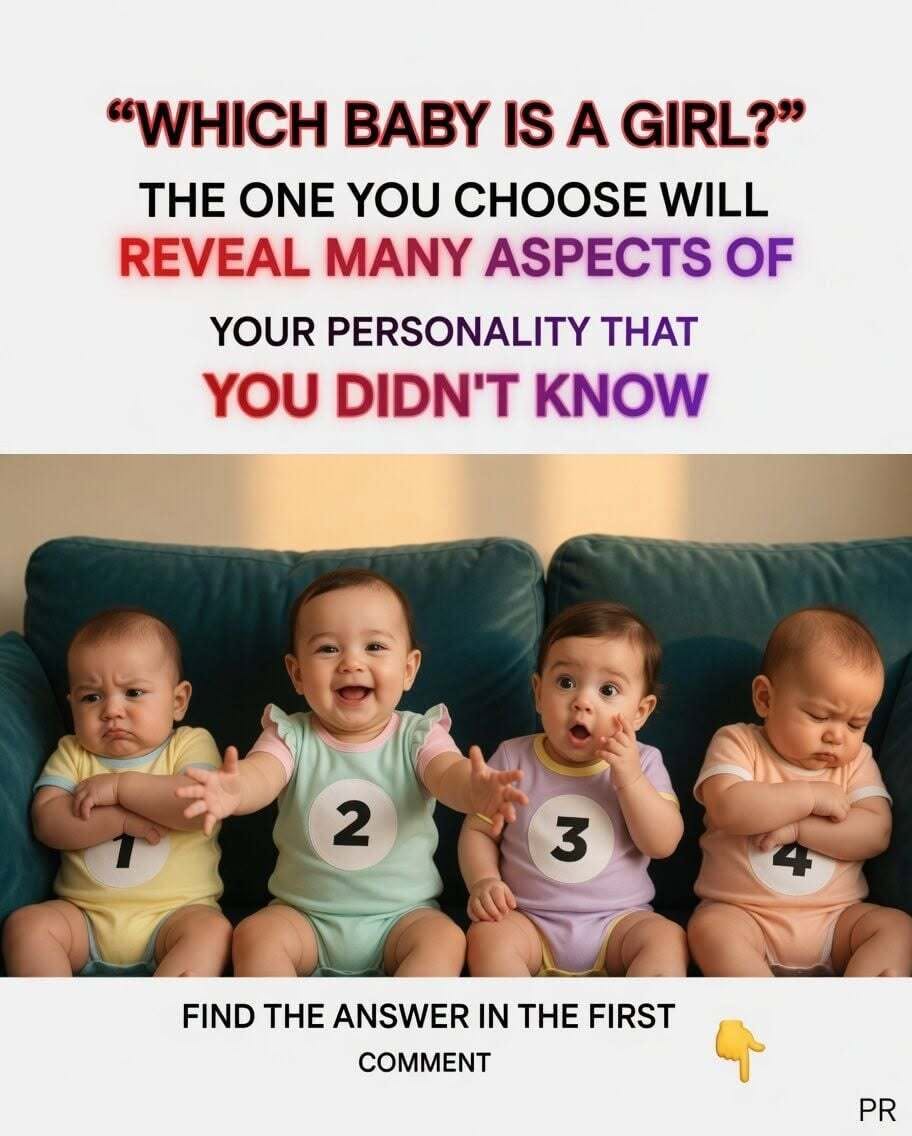
At first glance, the photo seems simple: four babies and one question—“Which one is the girl?” Most people choose quickly, then begin to second-guess themselves.
The challenge has been shared by millions, sparking debates as people search for hidden clues. But the real mystery isn’t in the photo—it’s in how our minds work.
When we see four similar faces, our brains instantly create stories. A smile may seem kinder, a gaze more confident, and before long we’ve assigned personalities based on a single image.
Many people favor baby number two and describe the child as warm, caring, and cheerful. But the truth is that there’s no reliable scientific way to determine a baby’s gender from facial features alone.
The test isn’t scientifically meaningful, but it reveals something fascinating about human psychology. We naturally seek patterns, trust first impressions, and look for meaning even when very little information exists.
That’s why these challenges spread online. They’re not about finding the right answer—they’re about understanding how we think. In the end, the most interesting question isn’t which baby is a girl, but why you chose the one you did. Often, that says more about the observer than the photo itself.