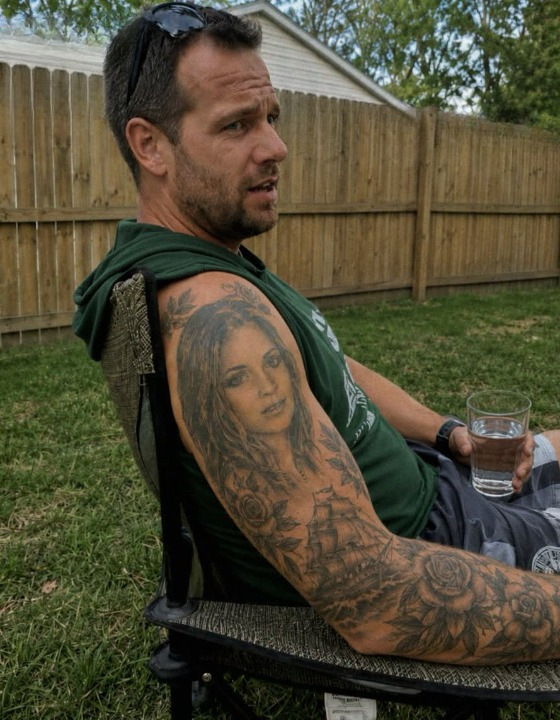
For 12 years, I stared at the woman’s face tattooed on my husband’s shoulder. He always said it was “just a random portrait,” something meaningless done by a friend learning tattoo art.
But I never believed him.
When I finally met her in a bakery, everything changed.
She looked exactly like the tattoo—older now, but unmistakable. The moment I mentioned my husband’s name, the color drained from her face. Not confusion. Fear.
She didn’t know about the tattoo. That was the first shock.
And when I told my husband, Ryan, what happened, his reaction wasn’t what I expected either. Not anger. Not denial.
Fear.
That was when the truth came out.
The woman, Sloane, had accused Ryan’s father of something serious when Ryan was a teenager. The town didn’t believe her. Neither did Ryan at the time. She was destroyed socially and forced to leave.
Years later, evidence proved she had been telling the truth all along.
Ryan had gotten the tattoo afterward—not as a tribute, but as punishment. A permanent reminder of his guilt for not believing her and for being part of the group that ruined her life.
He never told me because he couldn’t face what it meant about who he used to be.
When Sloane and Ryan finally met again, he apologized. And she forgave him—but told him something that stayed with both of us:
“Forgiveness doesn’t mean you stop carrying it.”
The tattoo stayed.
But now it meant something different.
Not love. Not mystery.
Just truth.