The morning started like any other.
Cinnamon toast. Coffee. A quiet house where nothing was supposed to go wrong.
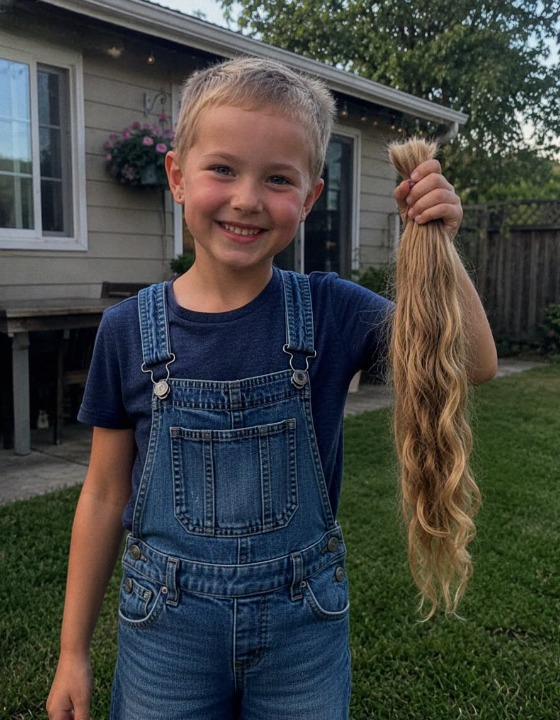
Then my daughter Nicole walked into the kitchen holding her ponytail in her hand.
Her curls—long, thick, and her favorite thing in the world—were chopped unevenly to her shoulders.
“I did it for Daddy,” she said calmly.
My heart dropped.
She explained it was because of “Purple Day” at school, where they learned about cancer and hair loss. She believed her father was sick and that she was helping him by cutting her hair.
That’s when she mentioned Grandma.
“She said Daddy is really sick,” Nicole whispered. “That he might not be here for long.”
I went cold.
Because my husband had been acting strange—quiet, distant, secretive phone calls—and his mother had been whispering in our home for weeks.
But no one had told me anything.
When I confronted my husband, the truth came out.
He had been going through medical tests—but the results were already clear: no cancer. No illness.
He had known for three weeks.
But he didn’t tell me.
And his mother had made everything worse.
She had told relatives he was dying. She had let fear spread. She had even convinced him to stay silent “so I wouldn’t be stressed.”
Meanwhile, my six-year-old believed her father was dying—and cut off her hair to “save” him.
When we finally confronted Grandma, the truth collapsed.
She hadn’t just misunderstood.
She had created the panic.
Not out of evil—but out of need. A need to be the center of concern. To be the one everyone relied on.
But this time, it went too far.
She was asked to leave.
And slowly, the truth repaired what fear had broken.
In the end, we sat with Nicole, fixing her uneven hair into a short bob.
She smiled at her reflection.
“I look brave,” she said.
And she was.
Because sometimes, a child’s love reveals the truth adults try too hard to hide.