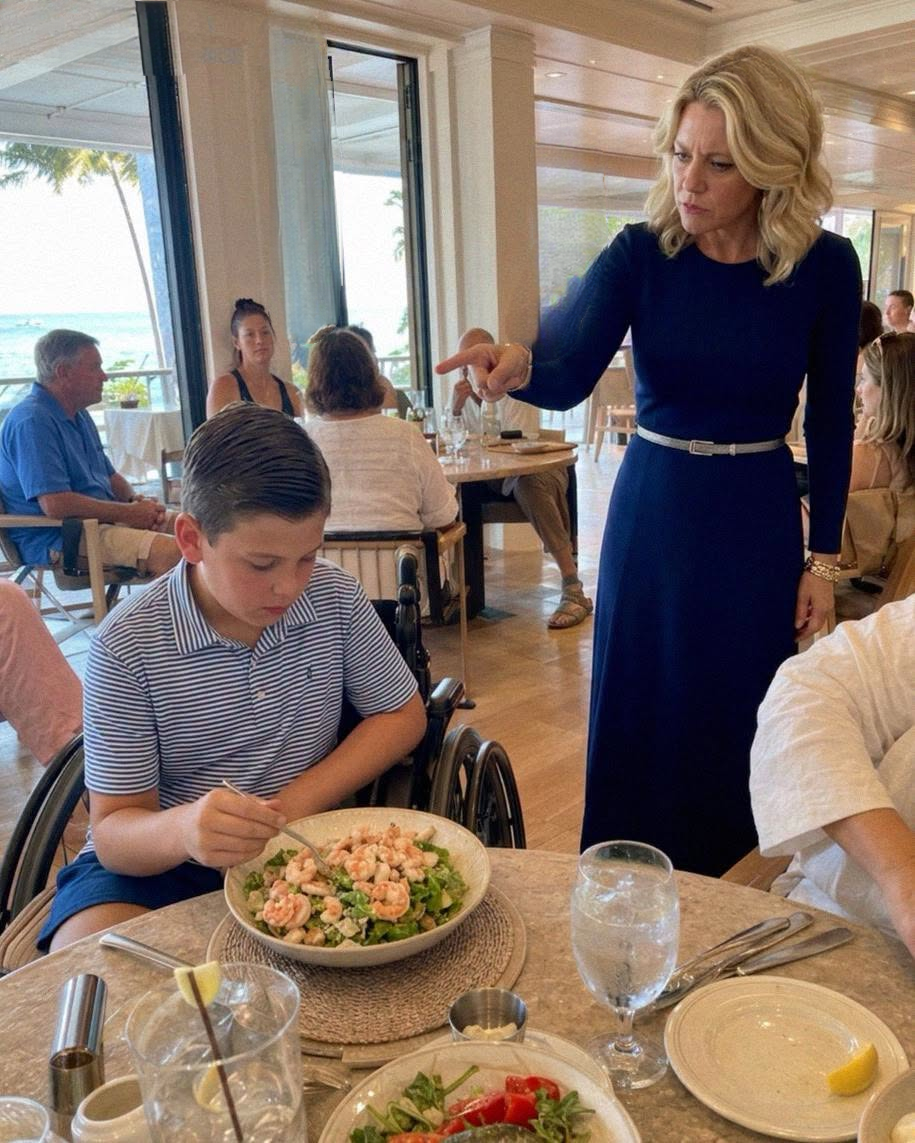
A Stranger Told Me My Disabled Son’s Wheelchair Was “Ruining Dinner”—So I Made Sure Everyone Heard What She Said
My husband Ben and I had planned one peaceful vacation dinner with our nine-year-old son, Liam, who has used a wheelchair since a car accident five years ago.
Everything was going perfectly until a woman at the next table approached us.
“Move him somewhere else. That wheelchair is ruining everyone’s meal.”
Liam immediately looked down at his plate. His smile disappeared.
I knelt beside him.
“Did you do anything wrong?”
“I bumped a chair and said sorry.”
“Then you’re staying right here.”
The woman insisted Liam was blocking the room. But the restaurant server confirmed the aisle was completely clear.
When the manager arrived, the woman claimed that Liam had nearly hit her and that I had threatened her.
I calmly explained what she had actually said.
Then something unexpected happened.
Several diners spoke up and confirmed Liam hadn’t bothered anyone.
Even the woman’s own son, who had just arrived with his fiancée, heard what happened.
He looked at his mother and said:
“You said that to a child?”
She tried to defend herself, but he refused to excuse her behavior.
Eventually, she apologized directly to Liam.
“I’m sorry I said your wheelchair was ruining dinner. It wasn’t. What I said was cruel.”
Liam simply replied:
“Okay.”
He didn’t owe her forgiveness.
The next morning, her son and his fiancée joined us for breakfast. He apologized for his mother’s behavior and told Liam:
“You shouldn’t have needed a room full of strangers to prove that you belonged here.”
Liam looked at him and quietly said:
“I already knew I belonged. I just forgot for a minute.”
That sentence stayed with me.
Because sometimes standing up for your child isn’t about creating a scene.
It’s about making sure they never believe someone else’s cruelty defines where they belong.