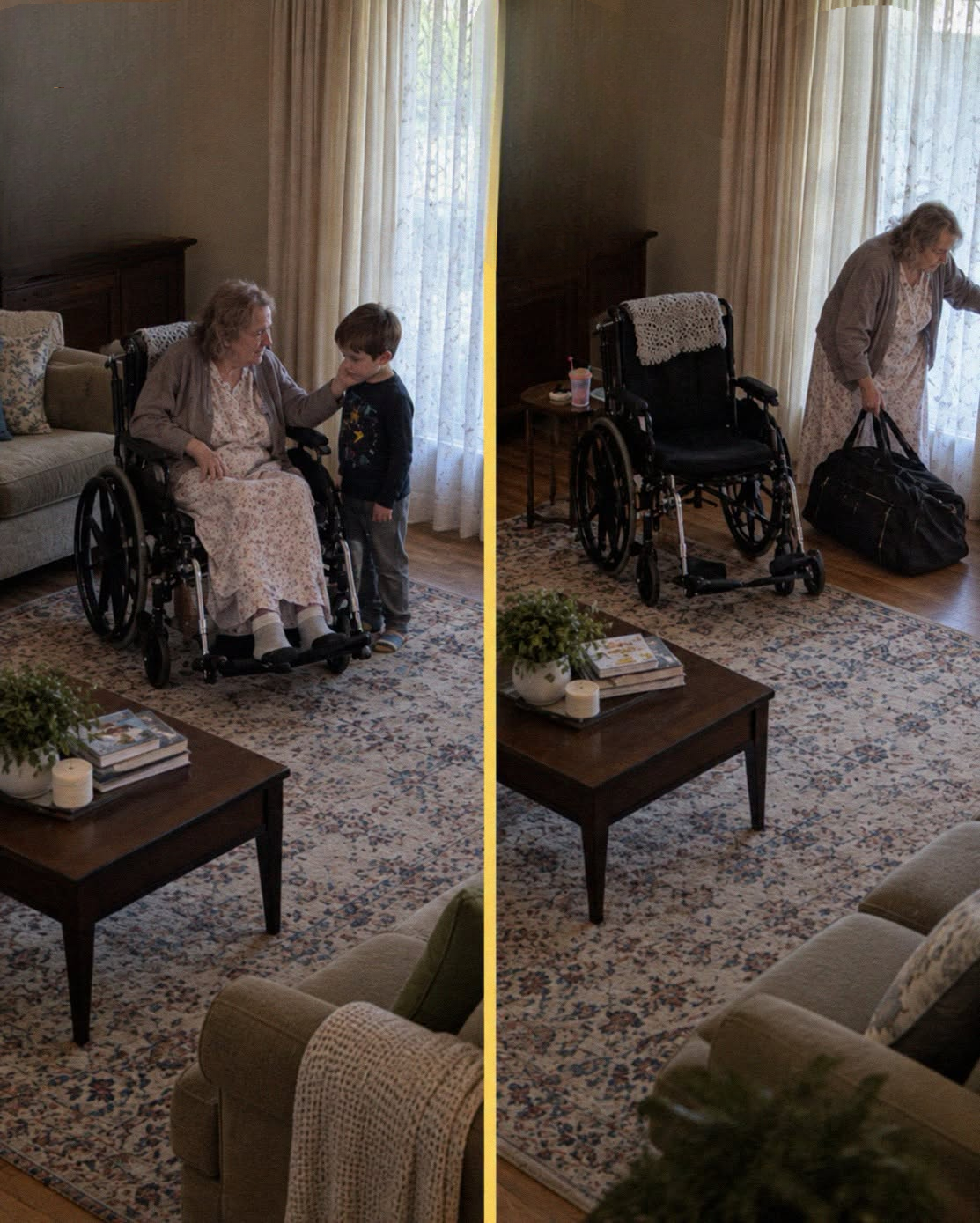
For eight months, I cared for my mother-in-law, Diane, the same woman who once told me her son deserved someone better than me.
After a terrible car accident, Diane came home unable to walk or speak properly. I washed her, fed her, and helped her with everything while raising my seven-year-old son, Ben, and working as a kindergarten aide.
Then one evening, Ben said something that made my heart stop.
“Grandma talks and walks when you’re gone.”
He explained that Diane had asked him to bring my late mother’s blue wooden box from my bedroom. The box held precious letters, photographs, and my mother’s wedding necklace.
My husband, Nathan, insisted Ben must have misunderstood. But I couldn’t ignore what my son had told me.
The next day, I installed a small camera in Diane’s sitting room.
While shopping for groceries the following morning, I opened the camera feed on my phone. At first, Diane sat motionless in her wheelchair.
Then she leaned forward, pushed herself to her feet, and took several shaky steps.
I froze.
She turned toward Ben, spoke to him, and pulled a black duffel bag from behind the curtains. Moments later, Ben returned carrying my mother’s blue box.
I abandoned my shopping cart and rushed home.
When I arrived, Diane was standing beside her wheelchair. My mother’s box lay open on a table, next to a duffel bag containing walking shoes, folded clothes, a rehabilitation assessment, and a small notebook.
The notebook revealed the truth.
Diane had begun speaking properly five weeks earlier and had managed to stand three weeks before. She’d secretly practiced while I was at work, afraid of losing her progress and ashamed to admit she was recovering.
But the blue box had another purpose.
Diane explained that she was writing me a letter. She wanted to place it beside my mother’s photograph because she was finally beginning to understand the pain caused by her cruel words before my wedding.
“I thought if I could look at her face, I might finally understand what it meant when I told you that you didn’t belong in this family,” she admitted.
Tears filled my eyes.
I was relieved she was improving, but I was hurt that she’d hidden everything and involved my little boy in a secret.
“You could’ve told me,” I whispered. “I would’ve been happy for you.”
I made one thing clear: she must never ask Ben to keep secrets from me again. She also needed professional guidance to continue her recovery safely.
When Nathan learned the truth, he was stunned. I handed him the notebook and asked a question he couldn’t answer: when had he last taken responsibility for the everyday care I’d been managing alone?
The following week, he arranged a medical reassessment and organized additional support. Diane still needed help, but her care plan could finally change.
She also apologized for the way she’d treated me before the wedding.
“You didn’t deserve any of it,” she said.
“No,” I replied. “I didn’t.”
Three weeks later, I sat on my bedroom floor looking through my mother’s photographs with Ben. He pointed to a picture of her standing beneath a maple tree near her old home.
“Can you take me there?” he asked.
For once, Nathan was taking Diane to rehabilitation, and nobody needed me to stay home.
I wrapped my mother’s necklace in its handkerchief, returned it to the blue box, and slipped the photograph into my jacket pocket.
“Are you coming, Mom?” Ben called from the hallway.
I smiled.
“I’m right behind you.”
After eight exhausting months, I finally had a moment to reconnect with my own memories—and share a piece of my mother with my son.