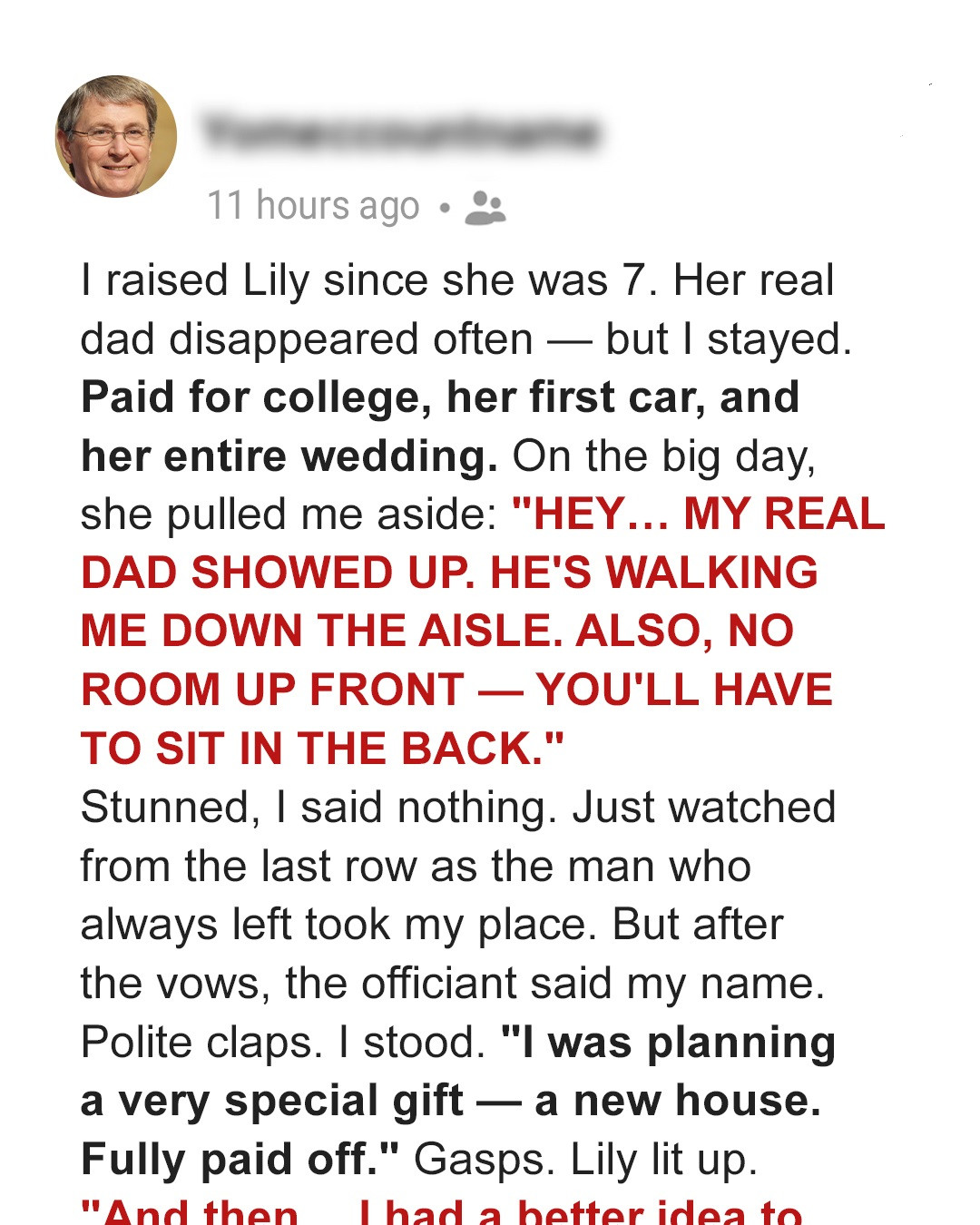
Daniel had raised Lily as his own since she was seven—through school plays, heartbreaks, and college debts. He never asked to be called “Dad”; he just showed up, again and again. When she got engaged, he offered to pay for the wedding. She cried and hugged him.
But something changed. Calls dwindled. She grew distant.
On her wedding day, Daniel arrived ready to walk her down the aisle—only to be told Craig, her long-absent biological father, would take that role. She called Craig her “real dad” and asked Daniel to sit in the back.
He did.
He watched Craig, freshly polished, walk Lily proudly to the altar. The same man who missed birthdays and heartbreaks now smiled for the cameras, while Daniel—who had actually been there—sat unseen.
At the reception, the officiant invited Daniel to speak. Calmly, he announced that instead of the surprise house gift he’d planned, he had donated the money to a foster foundation—one that helps kids who understand that family is about presence, not blood.
Lily exploded in front of everyone, furious, betrayed. Daniel didn’t argue. He simply said, “This wasn’t a stunt. It was clarity.”
She stormed out. Her groom followed. Craig stayed silent.
Daniel remained a little longer, quiet and steady, until the room emptied. Then he left too—not broken, but free.
Love, he realized, isn’t about titles. It’s about who stays when no one else does.