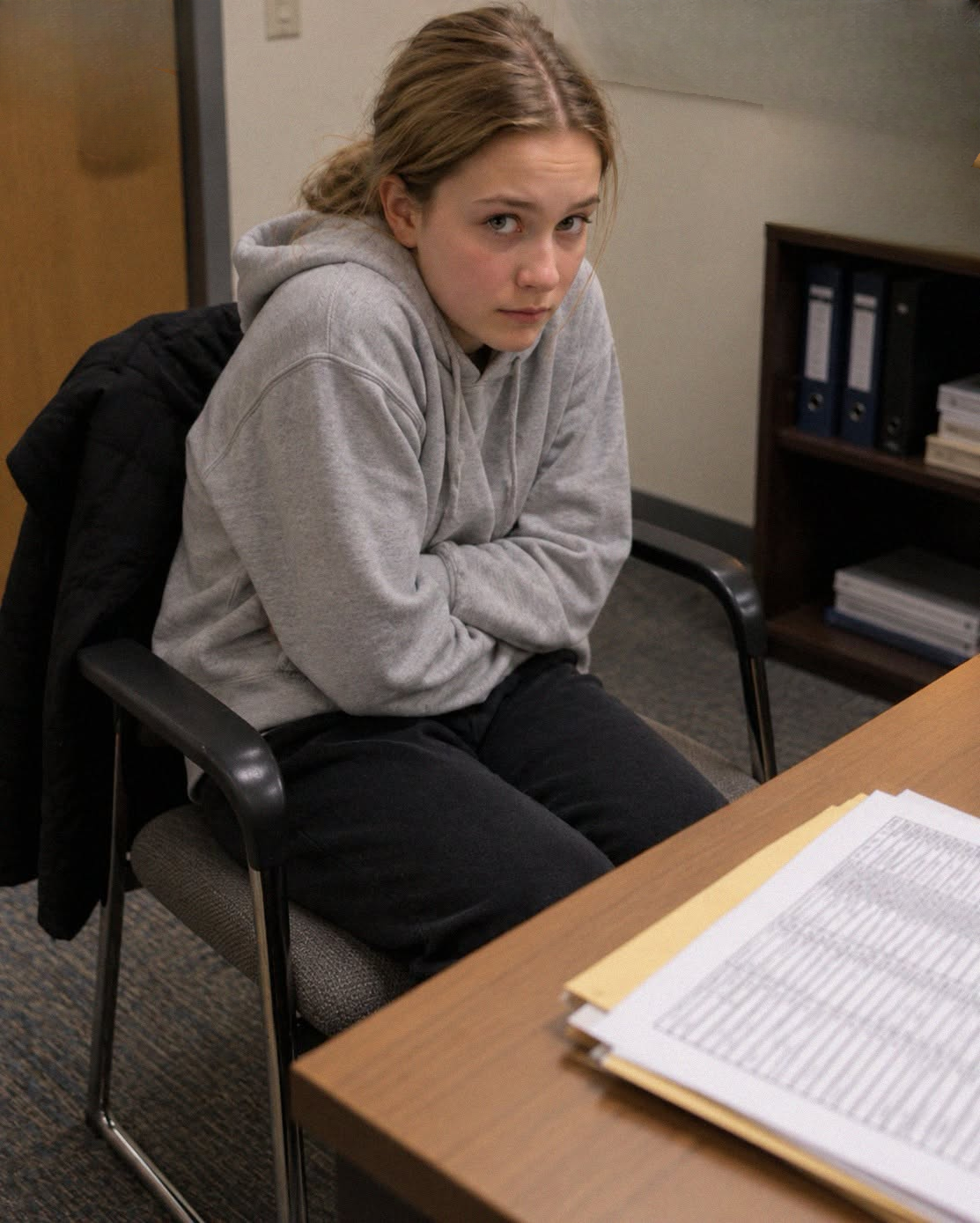
My 14-year-old daughter, Emily, was crying in the principal’s office when I arrived at her school. She refused to stand up, and when I tried to help her, she pointed at her history teacher and demanded that he leave.
At first, I thought she’d been injured. But her teacher explained that her skirt had caught on a damaged chair and torn in front of the class. Some students had laughed, and instead of comforting her, he had told her to stop making a scene.
Then I learned why the skirt meant so much to her.
It had belonged to my mother, Emily’s grandmother, who passed away two years earlier. Emily had secretly taken it from an old cedar chest, carefully repaired its little holes, and worn it for a history presentation about family heritage.
She hadn’t told me because she thought talking about Grandma would make me sad.
That broke my heart. I had spent so long avoiding my own grief that I hadn’t realized my daughter was grieving alone.
The skirt had a small embroidered message inside: “For Emily, who makes every ordinary day beautiful.” My mother had sewn it there years ago, saving the skirt especially for her granddaughter.
I contacted my mother’s closest friend, June, a talented seamstress who had worked with her for years. She agreed to help repair it—and invited Emily to work alongside her.
Over the next week, they carefully restored the torn seam. The repair wasn’t invisible, but the skirt had a new story.
The school also addressed the damaged chair, spoke to the students involved, and arranged for Emily to complete her presentation in a way that made her comfortable. Her teacher apologized for dismissing her feelings.
The following Friday, Emily stood in front of her class and shared the story of her grandmother, the skirt, and the repair.
She finished with words I’ll never forget: “I thought the damage meant its story was over. But now it has another story.”
That evening, she asked if we could talk about Grandma more—even if it made us sad.
I held her hand and promised we would.
Because sometimes, the most important thing we can do for our children isn’t fix everything that’s broken. It’s make sure they never feel they have to face the hurt alone.