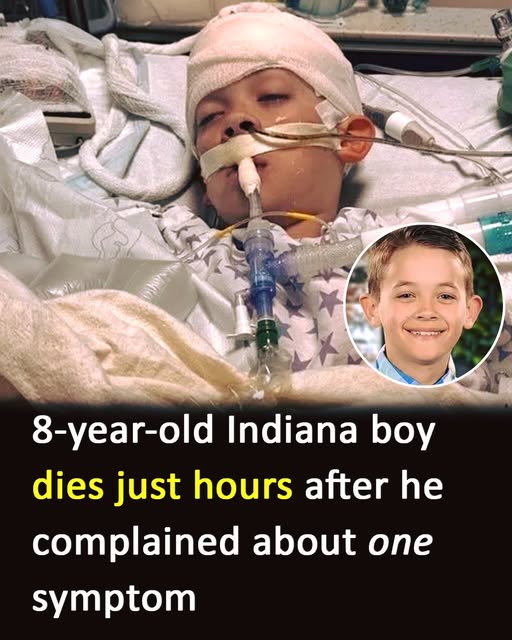
When Ashlee Dahlberg’s 8-year-old son, Liam, came home from school with a headache, she never imagined it would be their last night together.
By morning, Liam was barely responsive. At the hospital, doctors found his brain and spinal cord overwhelmed by a rare bacterial infection: Haemophilus influenzae type b (Hib), which quickly developed into deadly meningitis.
Despite being fully vaccinated, doctors suspect Liam contracted the infection from an unvaccinated child—an increasing risk as vaccination rates decline.
Hib, often misunderstood as the flu, can lead to rapid, life-threatening conditions like meningitis and sepsis. “You did everything right,” doctors told Ashlee. “But there was nothing we could do.”
Ashlee now urges parents to vaccinate, saying, “I feel I failed my child because I couldn’t protect him.”
Before the Hib vaccine’s introduction in 1985, the infection was often fatal or left children with lasting damage. While the vaccine is about 95% effective, it only protects those who receive it.
A GoFundMe in Liam’s memory describes him as a bright, kind boy who touched many lives. The fundraiser has raised over $54,000 to help cover medical costs.
Globally, Hib vaccination rates remain uneven—due in part to high vaccine costs. While 92% of people in developed countries are vaccinated, rates in other regions, like the Western Pacific, are as low as 33%.