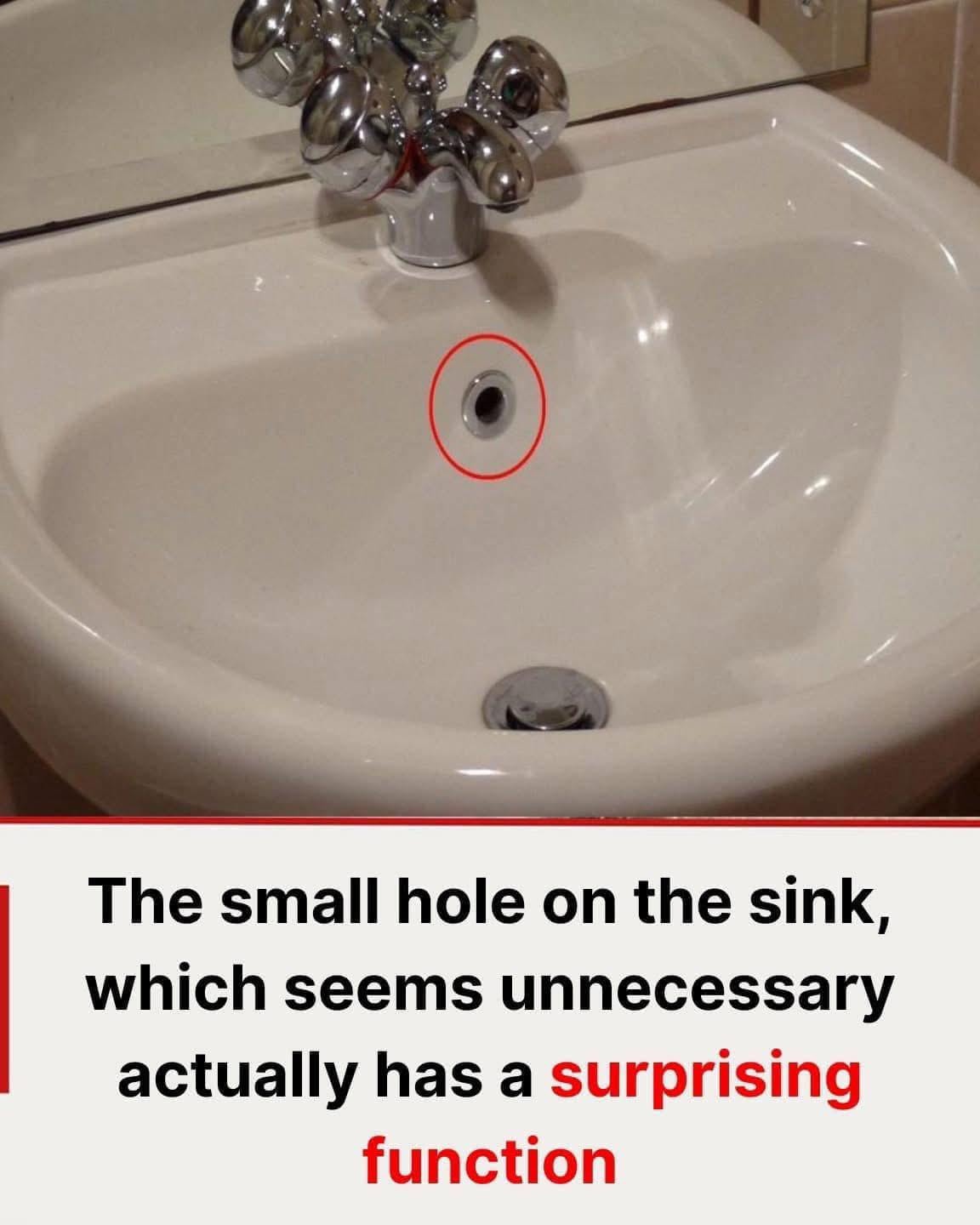
If you’ve ever left your tap running, that small hole near the top of your sink has likely saved you from a flood. Often overlooked, this overflow hole is an important safety feature that’s been part of sink design since the late 1800s.
Why it matters
The overflow hole serves two main purposes:
-
Prevents spills – When the water level rises too high, it channels excess water through a hidden passage to the main drain, bypassing the stopper. However, it can’t handle a fully open tap indefinitely, so always monitor running water.
-
Improves drainage – It allows air into the drainpipe, reducing suction and helping water flow out faster while minimizing clogs.
Where the water goes
Overflow holes connect to an internal channel beneath the basin that directs water to the main plumbing system, keeping it invisible and always open.
How to clean it
To keep it working efficiently:
-
Use a flexible brush or pipe cleaner to remove buildup.
-
Try vinegar and baking soda, then rinse with hot water.
-
Use a wet/dry vacuum for tougher clogs.
-
Clean every few months to prevent odors and slow drainage.