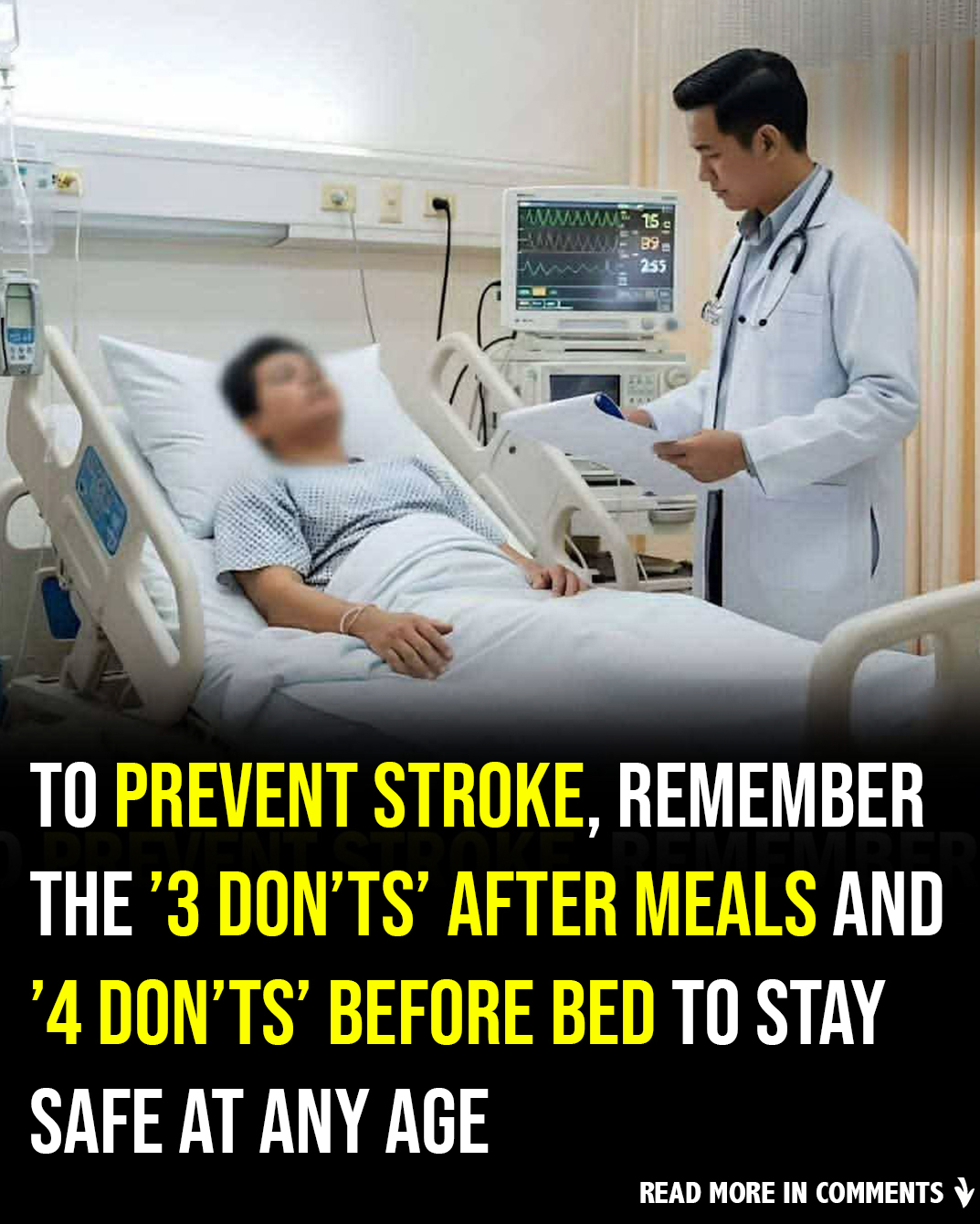
Most Strokes Are Preventable
A stroke occurs when blood flow to the brain is blocked, sometimes by bleeding. It can affect movement, speech, or memory — and needs emergency treatment. Each year, about 795,000 Americans suffer a stroke, but around 80% are preventable.
Common warning signs (CDC):
-
Face: drooping or uneven smile
-
Arm: weakness or heaviness on one side
-
Speech: slurred or hard to understand
While age and genetics play a role, lifestyle habits make a big difference. What you do after eating and before bed can affect your risk.
Habits to Avoid
-
Lying down right after eating
Wait 2–3 hours before bed. Lying down too soon can cause acid reflux and raise stroke risk. -
Skip the couch—take a short walk
A 10-minute walk after meals helps control blood sugar and supports heart health. -
Avoid bathing immediately after meals
Bathing draws blood away from digestion, which can cause dizziness or strain the heart. -
Limit alcohol before bed
Nightcaps may relax you, but heavy drinking raises blood pressure and stroke risk. -
Don’t eat dinner too late
Eating after 9 p.m. may increase stroke risk by 28%. Early dinners help digestion and heart health. -
Cut back on salt
Too much sodium increases blood pressure — a major stroke risk. Use low-sodium or potassium-based alternatives.
Better Sleep, Healthier Heart
-
Keep a consistent sleep schedule (7–9 hours nightly).
-
Avoid caffeine after late afternoon.
-
Create a relaxing bedtime routine.
Small, consistent habits — earlier dinners, light walks, less salt and alcohol, and regular sleep — can greatly lower your risk of stroke and protect both your heart and brain.