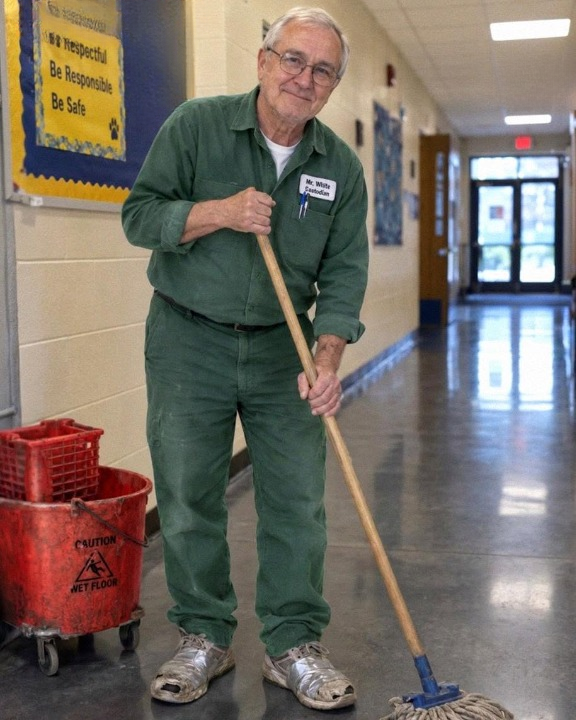
I gave my sneakers to our school janitor after seeing his shoes held together with tape. My classmates mocked him, but he always stayed kind—greeting everyone like they mattered.
When I offered him my shoes, he cried. He told me his daughter was sick and he couldn’t afford new ones. I went home in socks, thinking that was the end of it.
The next morning, I was called to the principal’s office. Two police officers were waiting.
They told me Mr. White had suffered a medical emergency—but before surgery, he asked for me. He had left a small wooden box behind.
Inside it were his name tag, a key, and a photo of a young shoemaker standing in front of a repair shop called White’s Shoe Repair.
We went there.
The shop was full of old tools and repaired shoes for children who couldn’t afford new ones. Mr. White hadn’t just been a janitor—he had spent his life fixing shoes for people who needed them most, until illness forced him to sell everything.
He had taken the janitor job simply to keep helping people in the only way he still could.
When I visited him in the hospital, he smiled at my sneakers and said, “Shoes were just where I started. People are what I’ve been fixing all along.”
Weeks later, he returned to school. Nothing dramatic—just kindness as always. He still knelt to tie children’s shoes, still fixed what others ignored.
And I finally understood:
I hadn’t just given him shoes.
I had reminded him that someone still saw the person behind the work.