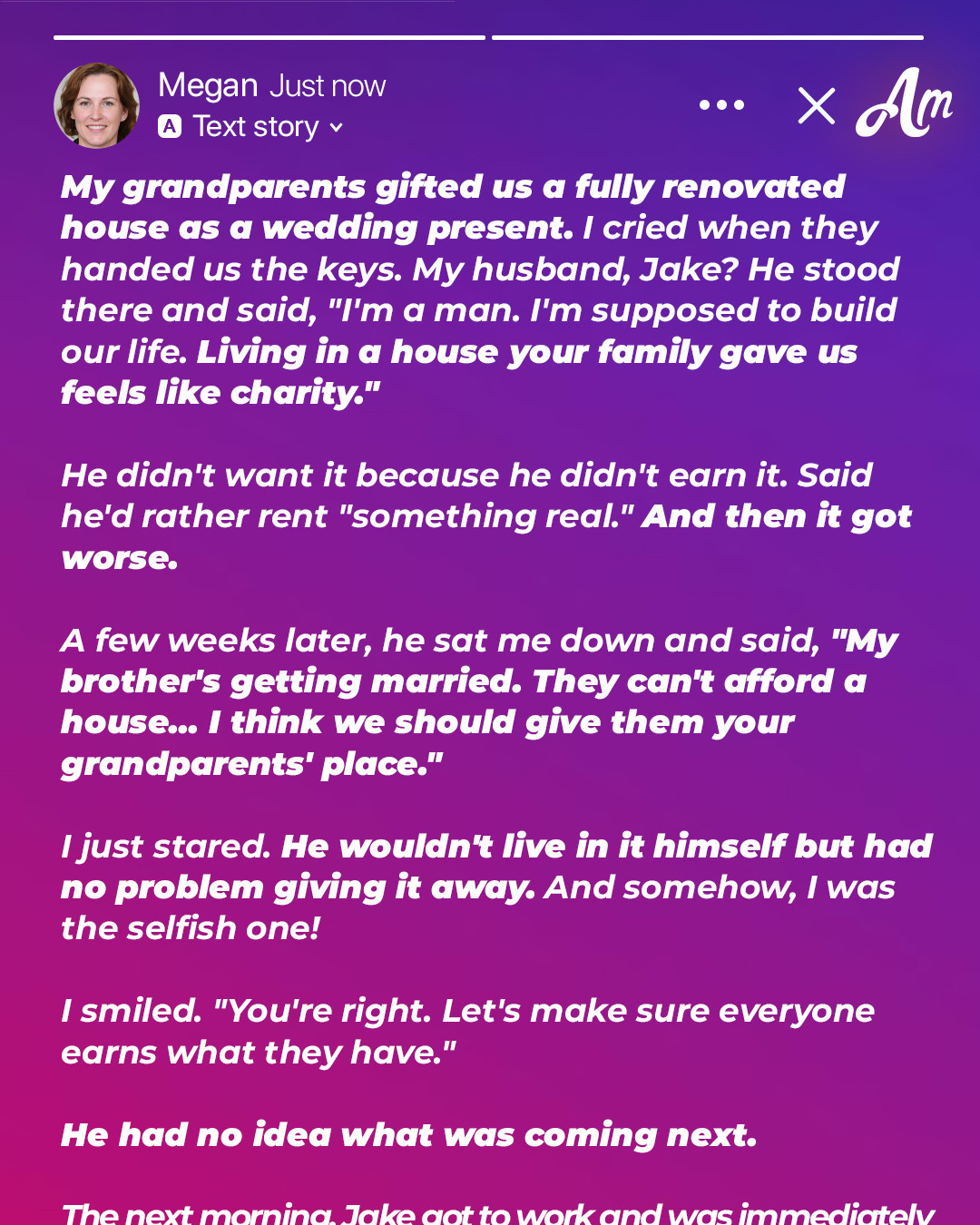
When my grandparents surprised us with a fully renovated house as a wedding gift, I was overjoyed. My husband, Jake, wasn’t. Instead of gratitude, he felt emasculated—like accepting it meant he wasn’t providing.
We’d been scraping by in a small rental, budgeting hard. So this gift—a beautiful Craftsman home with a wraparound porch and koi pond—was a dream come true. But Jake saw it as charity. “I didn’t earn this,” he said. “It’s not mine.”
I offered to put his name on the deed. He refused. We kept paying $1,800 in rent while the house sat empty. Then came the kicker: Jake suggested we give the house to his struggling brother. The pride that kept him from accepting the gift somehow didn’t apply when it came to giving it away.
I snapped—but not in anger. I smiled and agreed: everyone should earn what they have.
That night, I told my parents everything. My mom, who owned the company Jake worked at (thanks to her help), arranged for his quiet termination. Then they sent him an invoice for the wedding expenses—with a note: “Since you believe in earning everything on your own, we’d like to respect your values.”
Jake came home in shock. He cried—for the first time ever.
I told him the house was staying in my grandparents’ name. If we ever divorced, he wouldn’t get a piece of it. He begged for another chance. I let him reapply for his old job—but from the bottom.
We’re still together, but things are different. He’s working hard, saying thank you more often. I moved into the house alone for a while. It felt like mine—unclouded by pride.
He visits now. Helps in the garden. He’s changing. Maybe.
What I’ve learned?
Pride is costly.
Humility builds homes.