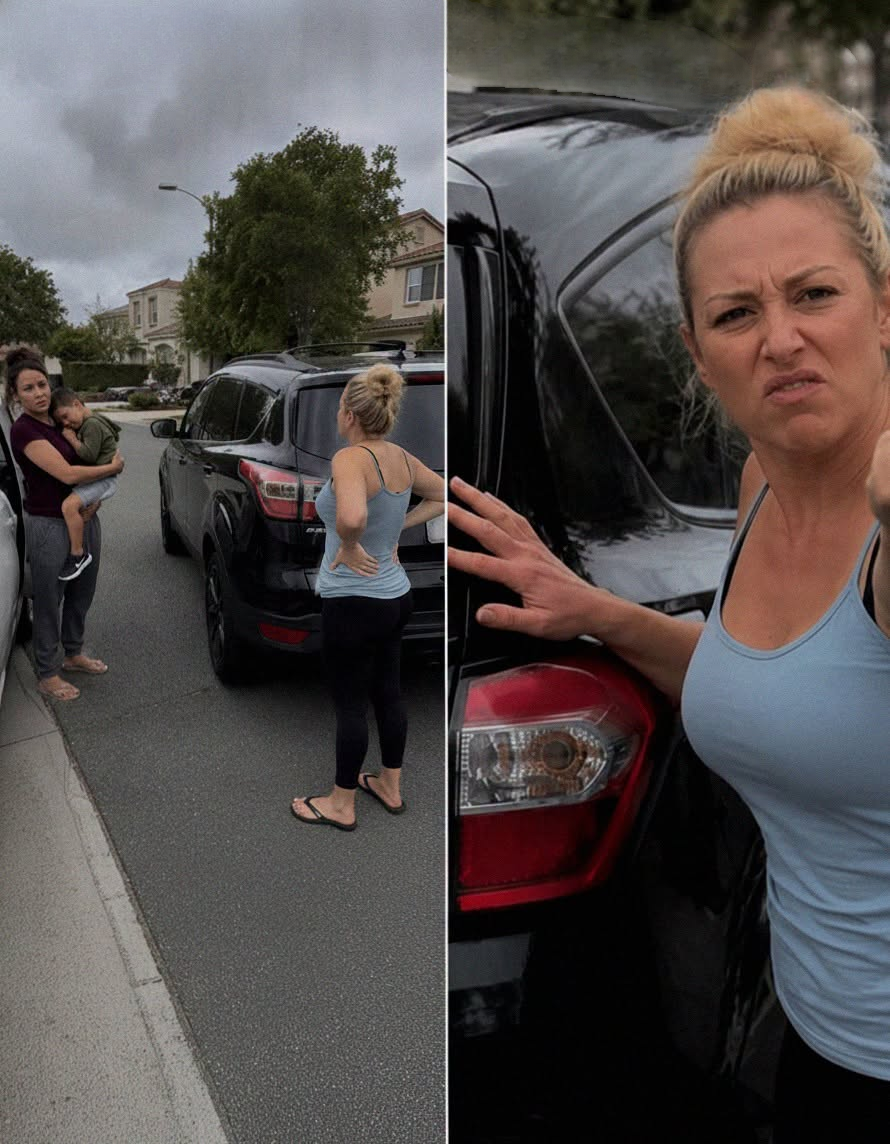
For months, my neighbor Melissa had treated my driveway like extra parking for her guests.
At first, she asked.
“Can I leave my car here for five minutes?”
Eventually, she stopped asking. Her sister and friends parked there too, even after I repeatedly told her to stop.
“You have plenty of room,” she’d say. “Why are you making such a big deal out of it?”
Then one Saturday, my 12-year-old son Noah suddenly complained that his heart was racing. He became dizzy and nearly fainted.
I called his doctor.
“Take him to the ER immediately.”
I grabbed my keys and rushed outside, only to find a black SUV blocking my driveway.
I ran to Melissa’s house.
“My son needs to go to the ER. Please move the car.”
She barely reacted.
“I’m not asking my guests to leave just because your son feels sick.”
“I’m not asking them to leave. Just move the car!”
She finally asked who owned the SUV.
A woman stood up, but before she could move, another guest spoke.
“Wait. What did you say about her son?”
The woman was a doctor.
She came outside, checked Noah, and immediately told me to call an ambulance.
Then she turned to Melissa.
“You told people they could park in her driveway?”
Melissa went silent.
Another guest admitted, “She told me the same thing.”
Suddenly, I realized Melissa had been giving people permission to use my driveway all along.
The SUV was moved, but it was too late to drive Noah myself. His condition worsened, and he nearly collapsed before the ambulance arrived.
At the hospital, doctors diagnosed him with an episode of SVT, an abnormally fast heart rhythm. Thankfully, he stabilized and was sent home with follow-up care.
The next morning, Melissa came to my door in tears.
“I’m sorry,” she said. “I thought it wasn’t a big deal.”
“You knew I asked you to stop.”
She nodded.
“I know.”
For months, she’d treated my boundary as an inconvenience.
But that day, she finally understood why it mattered.
My driveway wasn’t just a piece of concrete.
It was the way my family needed to get out in an emergency.