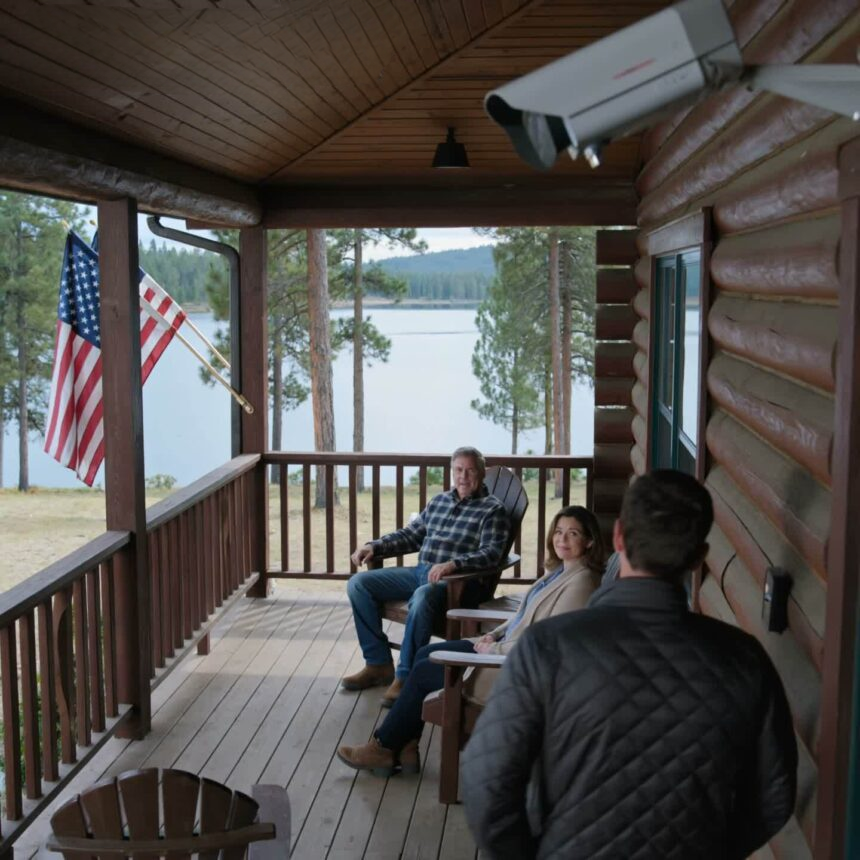
My Son-In-Law Demanded His Parents Move Into My Lake House, So I Let the “Camera” Speak
I retired at 63 and bought a lake house on Lake Vermilion with money I had earned over 37 years as a structural engineer. It was supposed to be my quiet escape from Chicago.
Then my son-in-law, Gareth, called.
He casually informed me that his parents needed somewhere to stay and that my three-bedroom cabin was the “obvious solution.” When I refused, he accused me of being selfish and suggested I return to Chicago.
A few days later, his parents arrived anyway.
I told them clearly they were not welcome. They argued that they were family and had every right to stay. I warned them that refusing to leave would mean calling the sheriff.
They finally left—but Gareth wasn’t finished.
I installed three security cameras around the property. Weeks later, one alert showed Gareth inside my cabin with a man and woman carrying a clipboard. He was giving them a tour.
He was trying to sell my property.
I immediately saved the footage and contacted my attorney.
Then a private investigator uncovered something worse: Gareth had been secretly transferring money from the joint account he shared with my daughter to his father’s accounts. Tens of thousands of dollars had disappeared. He had also opened a line of credit in my daughter’s name without her knowledge.
When I showed Diane the evidence, her entire understanding of her marriage collapsed.
The cameras, bank records, and documents proved Gareth wasn’t trying to help his parents. He had been using them as leverage to gain access to my property and eventually profit from it.
Diane left him and filed for divorce.
Gareth tried everything—legal claims against my cabin, accusations that I was mentally incapable, even an anonymous complaint to authorities. Every attempt failed because I had documented everything.
My cameras had started as security.
They became evidence.
Eventually, my daughter and granddaughter moved into the lake house temporarily. The place that Gareth had tried to take became the place where Diane finally felt safe again.
Years later, I still keep the cameras.
But now they mostly record deer, raccoons, and family memories.
One evening, my granddaughter asked me, “Grandpa, if someone says your house is theirs when it isn’t, what do you do?”
I told her:
“You tell the truth anyway.”
Because sometimes the cleanest kind of justice is simply refusing to let someone else’s lie become your reality.