ChatGPT said:
Did you know the full Love Me Tender movie is on YouTube? It’s a treat—Elvis shines not just as the King of Rock ‘n’ Roll, but as a singer, dancer, actor, and screen star.
This 1956 Civil War–set romantic Western marked his film debut. At the New York premiere, 1,500 fans camped out under a 40‑ft Elvis cutout, and their screams often drowned out his lines—proof of his explosive star power.
Initially titled The Reno Brothers, the name was changed to Love Me Tender to leverage the hit song. Elvis plays Clint Reno, youngest of four outlaw brothers, loosely based on the historical Reno Gang.
Before filming, Elvis had even worked as a cinema usher, dreaming of acting. Though he got third billing (after Richard Egan and Debra Paget), he arrived fully prepared—memorizing all lines in just over a month, impressing producer David Weisbart with his dedication.
The filmmakers actually added more scenes for his role as filming progressed. But despite the Western setting, Elvis began singing five minutes into his first scene—complete with screaming fans—definitely not 1860s-era behavior.
Although Elvis shared songwriting credits for all four songs, he admitted in 1968 he only contributed one line to the title track. That song, adapted from the Civil War ballad “Aura Lee,” went #1 for five weeks and sold over a million copies—before it was even released—following his Ed Sullivan debut on September 9, 1956.
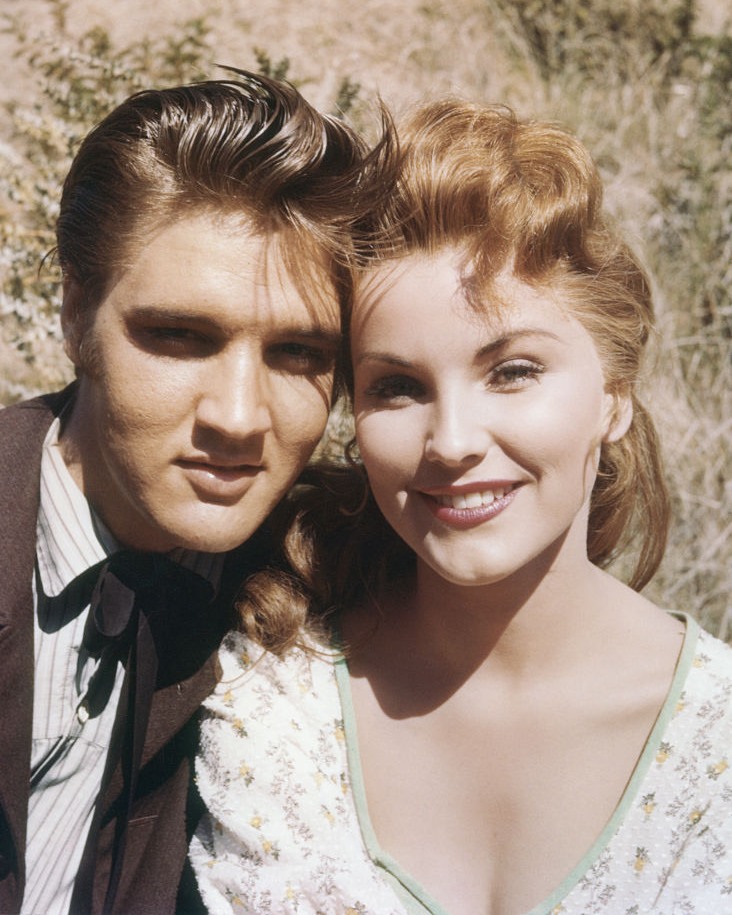
On set, Elvis became smitten with co-star Debra Paget, even proposing marriage, though her parents declined. Paget’s beauty later influenced Priscilla Presley’s style too.
Originally, the film ended tragically—Clint Reno dies in Cathy’s arms—but Elvis’s mother and fans were upset, so they added a happier, silhouette-style ending. That change introduced a continuity goof: by then, Elvis’s hair had been dyed black, unlike the light brown it appears in the film.
And for some fun bloopers: a soldier’s gun flag strangely appears and disappears, a Confederate soldier zips pants before zippers existed, a sudden car is visible behind Cathy at a window, and in “We’re Gonna Move,” Elvis stops strumming—but the guitar audio continues.
In short, Love Me Tender is a fascinating piece of cinematic history from Elvis’s debut—full of charm, flaws, and iconic moments!