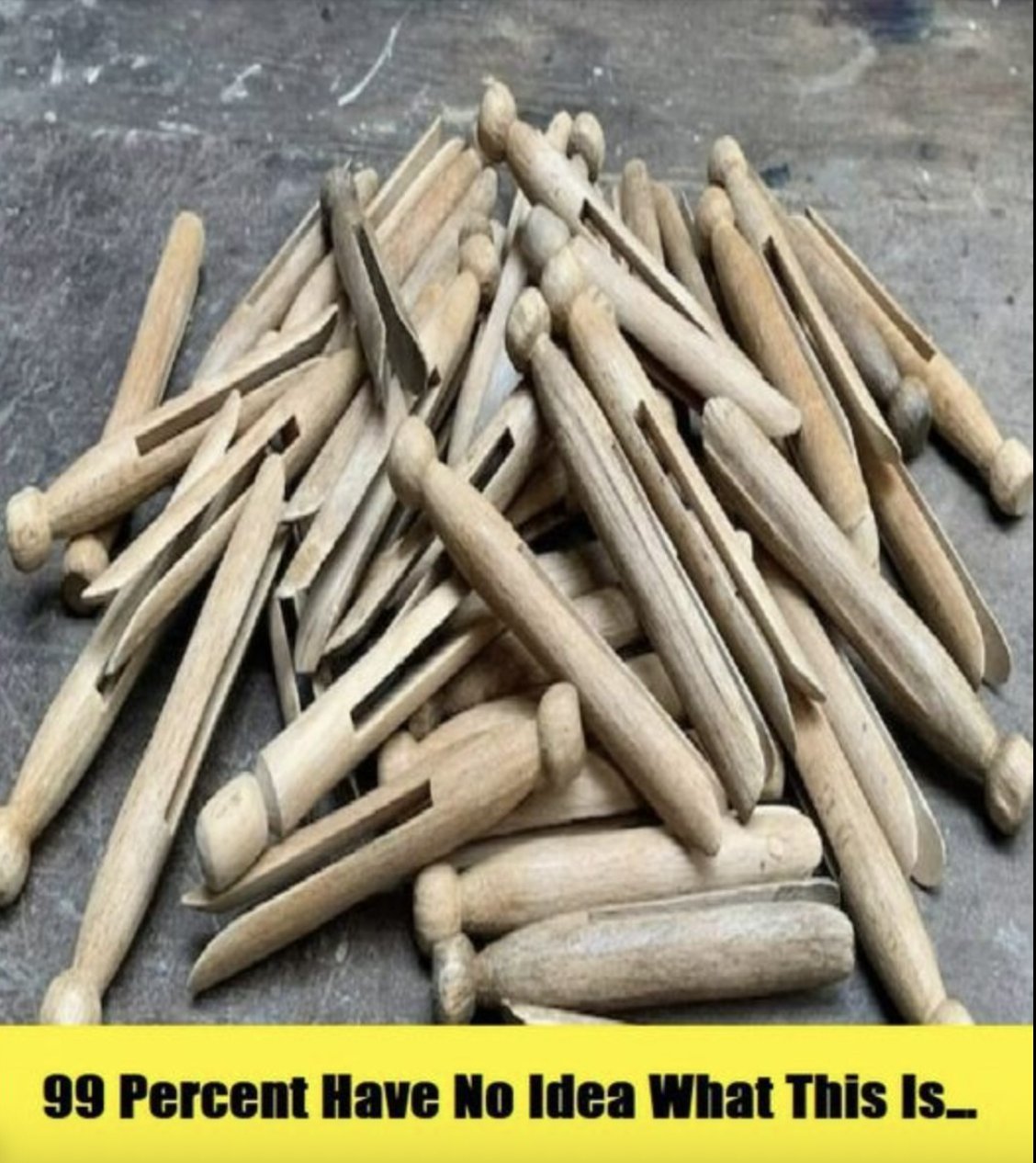
Before technology made socks vanish in dryers, people relied on simple, clever tools to tackle household chores. One of these was the wooden clothespin.
Originally a solid wooden peg, it evolved into the familiar two-piece pin with a spring, designed to secure clothes to a line—an upgrade from earlier versions that let garments blow away, a “serious evil to washerwomen.”
Recently, a social media user posted a photo of wooden dowels with two legs, sparking nostalgia among older generations. The answer: old-fashioned clothespins once used to hang wet clothes outside to dry in the sun and fresh air.
Clothespins date back to ancient times, where early versions were handcrafted from wood, bone, or stone—often with decorative patterns. The modern design emerged in 1853 when David M. Smith of Vermont patented a spring-loaded wooden pin, designed to grip clothes tightly and resist wind.
As industrialization grew, clothespin production became faster and cheaper, spreading their use globally.
Despite the rise of plastic alternatives and electric dryers, wooden clothespins remain popular today—for drying, crafts, and their eco-friendly charm. They’re a lasting symbol of traditional laundry practices and simpler times.